-->
no
no
Showing posts with label waste. Show all posts

Peak Stuff

4 comments
Have you reached peak stuff?

According to IKEA head of sustainability, we have (read here).

“We talk about peak oil. I’d say we’ve hit peak red meat, peak sugar, peak stuff … peak home furnishings.”

Actually, market statistics show peak gadgets too - sales for iPads and iPhones have either stagnated or dropped.

It's about time because, according to scientists, we are now officially in the Antropocene geological period, a period that begins when human activities started to have a significant global impact on Earth's geology and ecosystems.

People don't seem happy with stuff anymore, clearing out their homes, decluttering, and now buying less. I hope it remains that way because I miss the times when we borrowed or shared things. I remember when we shifted into our first home, and we got a lot of secondhand furniture (some still looked brand new). We made good friends in the process. 

Have you reached peak stuff? I know I have.

Texture 1
Image: Hannes Desmat
My Wardrobe Audit - I have too many clothes

23 comments
My Wardrobe Audit - I have too many clothes
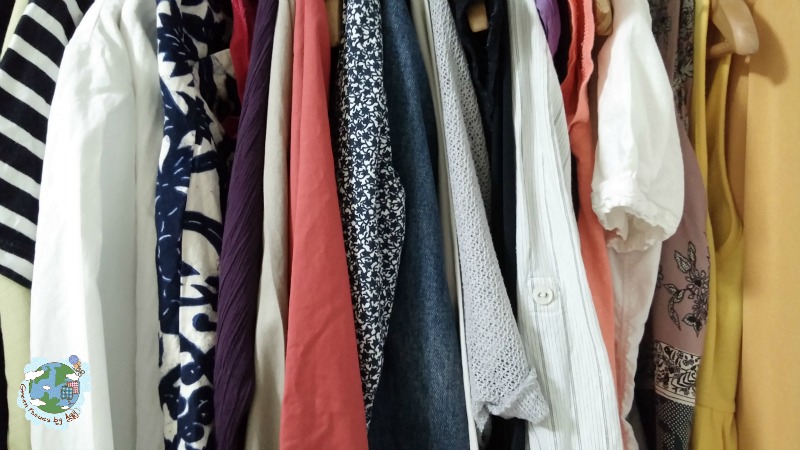
Yes, it's true! I may upcycle, I may sew, I may love making things, but I have too many clothes.
I happily thought that I had less than 20 items but when I started auditing my wardrobe last week .... oh no....one, two......forty......!!
wardrobe audit

Wardrobe Audit
So this is what I have (includes upcycled items as well):

20 tops (inclusive of t-shirts, work shirts, and lots of upcycled ones)
5 dresses (three upcycled, one swapped and the other just very old!)
4 casual trousers
2 pairs of jeans (one mended)
5 pairs of shorts  (two mended, one upcycled)
2 yoga pants
2 jackets (one upcycled)
LOTS of corporate shirts (from previous company functions)
1 pair of trainers
1 pair of plimsolls
2 pairs of sandals
1 pair of Birkenstocks
3 pairs of formal shoes (2 x black and 1 x red)

And the most ridiculous thing is that most of the office items were from my time when I was deskbound. Well, you know what this means...they have never been worn since I left my job in 2012 .... 3 whole years untouched and in my wardrobe. In fact, I did give some away to the Clothes Swap in September.  I think I am still in the "I will upcycle it" stage, but considering it has been 3 years, I don't think it will happen.

wardrobe audit

Reflection
Not only will I not be getting more stuff, but I will be clearing some of it out, and thinking about what needs to be part of my wardrobe. AND if I do upcycle, I will make sure that I wear it.  Time to sort out my clothes!

Do you have too many clothes?
wardrobe audit
PS - I think I should include shoes as well!

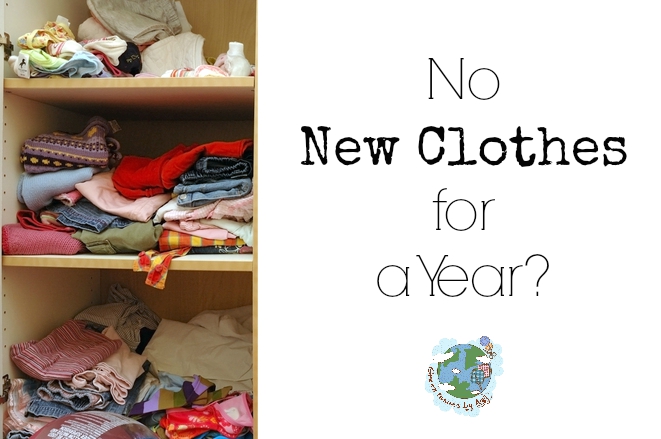
No New Clothes For a Year?

22 comments
No New Clothes For a Year?
Let it go
When I was looking through my wardrobe for clothes for the clothes swap, it didn't occur to me that I had a lot of clothes. I didn't count them.but I realised that I had kept a number of garments I no longer wore.

Office clothes - shirts, pencil skirts, dresses
Evening wear - worn once 10 years ago
Perhaps I was thinking I would wear these again.
But I did contemplate refashioning them....when I had the time....

But sometimes, you have to let go.
So, I gave them all away to the clothes swap.

Over a hundred people let go of their clothes for the swap last Saturday. As one of the organisers, I was overwhelmed by the number of garments we collected. We set a maximum of 12 per person, and in total we received almost 1000 (yes, that's right!!!) pieces of garments, shoes and accessories.


Where did all those clothes come from?
Some still had their tags on.
Some were gifts but didn't match the person's style.
Some were impulse buys.

No New Clothes for a Year? Anyone Want to Join Me?
During the swap collections, I chanced upon Make Do & Mend Life's resolution to buy no new clothes for a year.

Her rules include not buying second hand or even new underwear.

I hardly buy new clothes.
The last time I did was buy yoga pants in January.
I repair and upcycle a lot too.
So can I take it further? (As you can see I put a "?" in my post title!)
No thrift shops? No new underwear?
I'm going to try. I'll keep you posted!


More pictures of the clothes swap at this link. 
Thank you to Fashion Revolution (HQ), Connected Threads and Kapok for making this event happen.


Design - Closing the Loop

11 comments
Design - Closing the Loop

A few weeks ago I visited a recycling plant down in Tuas, Singapore. I was extremely excited as it's not usually open to the public and it's not something you get to do everyday!

Clothes Don't Get Recycled Here
Of course I had to ask about clothing! Well, just to disappoint everyone, the public waste collector does not take clothes for recycling anymore. They did do this when the door-to-door recycling scheme was still around, but with the implementation of the centralised recycling bins, the clothes get contaminated and end up being sent to be made into scraps for use at workshops, or even incinerated.
But...but..but...
Well, that's what the person in-charge said to me.
No one wants dirty clothing. The plant suggested that clothes be sent to the charity / thrift shops instead... but how much can they take?

Fibre Recycling Means Down-Cycling
The second disappointment is that when a garment is recycled, it does not get transformed into another one. Unlike an aluminium can which can be indefinitely recycled into another can without compromising its structural properties, the fibres of a garment become too damaged during recycling to be spun back into yarn.  The shredded garments are usually used to fill furniture, acoustic walls and even car seats. For quality textiles to be produced, the recycled fibres must be blended with virgin fibres. Redress Asia's R-Cert requires that a minimum of 20% recycled fibres remains in the blend and in the finished garment. Unfortunately, mechanical fibre recycling is the most scalable recycling technology to-date for natural fibre post-consumer textiles. 
Redress Asia
Source: Redress Asia, R-Cert

For chemical fibres such as certain types of polyester and nylon, chemical fibre, rather than mechanical fiber recycling is used.  
What Can Fashion Designers Do?
Can fashion designers design garments for the Circular Economy? Can we minimise the number of garments entering the waste system? Last week I looked at designing for durability, emotional durability and repair. This week, it's all about recycling, upcycling and disassembly 
#1 Design for Recycling
The process of recycling, be it chemical or mechnical is laborious.  Recycling companies need to understand what is in the garment before it is sorted and recycled back into quality textiles. Garments need to be designed of mono-materiality and be labelled properly  ie, pure cotton or polyester etc. 
  • Design it for 100% xxx: mono-materiality. A garment can't be recycled textile-to-textile if it is 99% cotton. 
  • Designing with fewer non-textile parts e.g. buttons, zips, studs. All these add to easier sorting and recycling.
  • Work together with recycling companies that deal with certain textiles e.g. Patagonia collaborates with Teijin Fibre to upcycle their polyester garments. 

Until we find a way to recycle clothing of mixed materials (and which is also scalable), designing for mono-materiality is the way.   [Note: Eco Circle in Japan and Worn Again in the UK are looking at ways to recycle mixed-fibre materials]
Kate Goldsworthy's research looks at zero-waste techniques and also mono-materiality.  This is one of the garments (Laser Line) produced from 100% polyester.  
design for good
Source: Laser Line

#2 Design for Upcycling
Let's postpone the arrival of clothes to the bin. Can we design garments for upcycling? Perhaps we can include little notes with the garments to inform our customers how the garment could be upcycled. All the production textile waste could be used in the designs of other clothing lines. Twice Upcycled explored using different techniques (including laser welding and etching) to prolong the life of a shirt by upcycling it once and then a second time after use. 

design for good
Source: http://www.upcyclingtextiles.net/#/concert/

#3 Design it for Easy Disassembly - there's a lot of talk about making appliances easy to disassemble for repair or to upcycle / recycle the parts. What about clothing? I found this technology called wear2. The special Ecostitch of the garments can be easily dissolved using microwave technology which means the garments can be re-used or recycled easily.  Watch this video and tell me what you think!


#4 Design for Composting
This might be extreme, but I do like the idea although I wouldn't compost it unless I've worn it to bits. Frietag developed a 100% biodegradable textile from hemp, flax and modal (fibre from wood) and it breaks down within a few months of being in the composter.
Source: Oliver Nanzig

Are there any other ways of keeping clothes out of the bin?

This is part of the Fashion Designers Do Good series. Read more here.

design for good

Design for Minimal Waste (Pt 2)

4 comments
fashion designers do good


Fast Fashion Means More Waste

"80 billion items of clothing are manufactured worldwide each year"
European Year for Development 2015

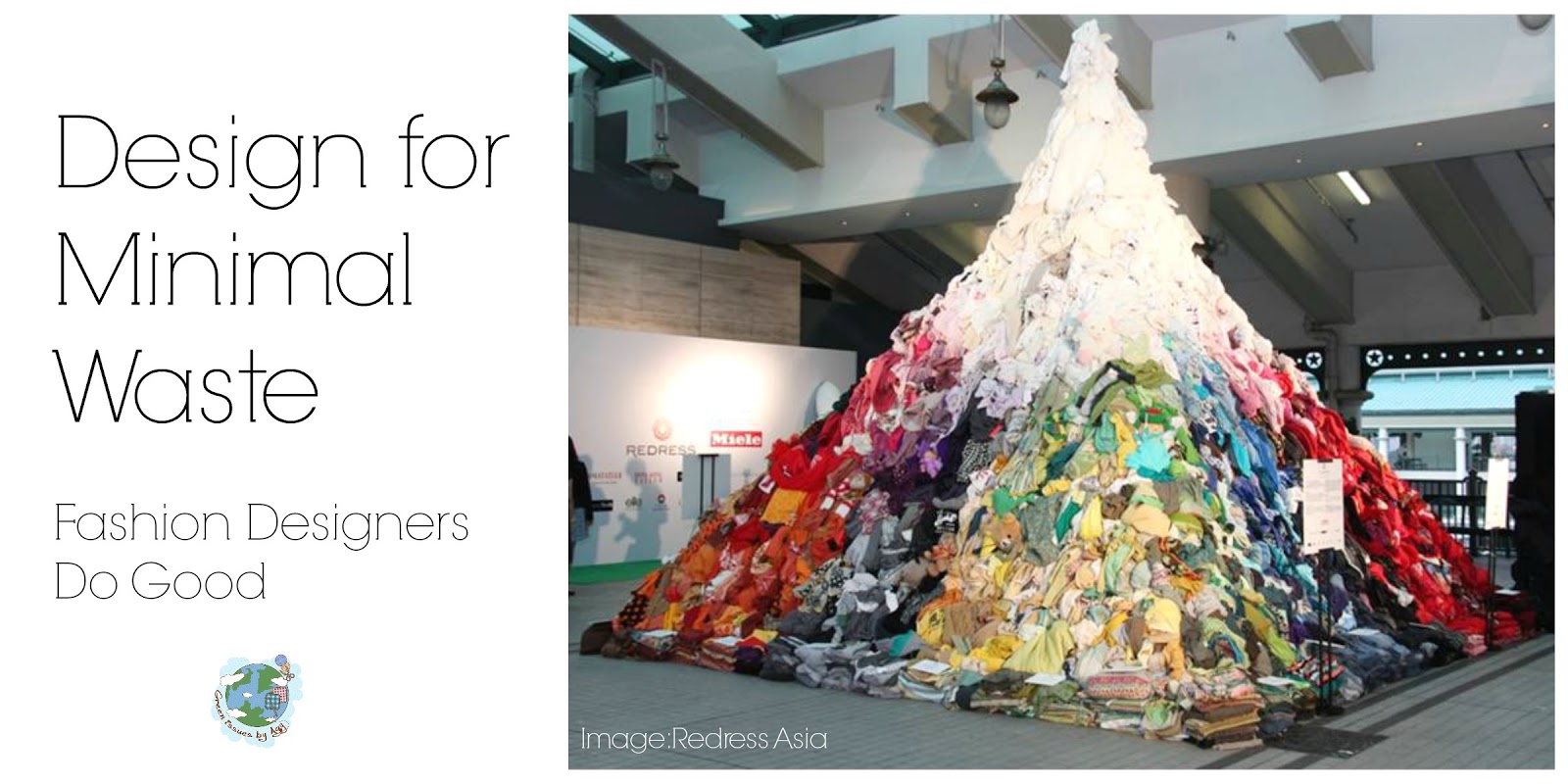
Today the fashion industry is about creating new clothing lines every 2-3 weeks, and unfortunately, we have responded positively to this business model. We voraciously consume whatever is the trend of the season (or possibly day!), and this habit has generated mountains of clothing waste. 
Are you guilty of throwing out clothes that are just worn a few times.......
..... that are slightly worn......
maybe even if it has just lost a button.....?
Why are we now a generation of consumers that purchase based on quantity rather than quality? 
A Cambridge University study reports that "in 2006, people were buying a third more clothes than they were in 2002, and women have four times as many clothes in their wardrobe than they did in 1980. Women are also getting rid of similar amounts each year." 


Can Fashion Designers Influence Post-Consumer Waste? 


Last week we looked at how fashion designers can make decisions to minimise pre-consumer waste, so what about minimising post-consumer waste?


#1 Design for Durability


In the race for cheaper and faster, something has to give, and this means garment quality (amongst other things) is compromised. According to WRAP's Design for Longevity, there are four areas in which designers can make changes to prolong the life of garments:

a) Size and Fit
Undamaged garments are primarly discarded because they no longer fit, but designers can help increase their longevity if the clothing can be easily adjusted.

Being constructed of individual panel shapes, a garment can be designed for future alterations to fit an individual's shape. Let's take a leaf from:    

  • the 1800s when scraps of fabric were used to extend the hem and increase the girth of the garment as children grew taller, or adults grew larger in the middle! 


  • the adjustable waist bands that are commonly found in children's trousers. Can we apply the same for adult trousers?

Source: Speedbargains.com

  •  The Shoe That Grows -  I find this inspiring. These are shoes designed to be adjusted up to 5 sizes as the child grows older, and lasts 5 years.  Although they are designed for use in impoverished countries, they would be great everywhere! 

Source: The Shoes That Grows

b) Fabric quality - good quality textiles means longer lasting clothes, but it also means using the appropriate stitches.
c) Colours and Styles - everyone loves classic or timeless styles. I discovered the 30-year sweater! Now doesn't this look classic to you? Let's design things that people want to wear.


Source: http://blog.pier32.co.uk/2015/06/introducing-30-year-sweatshirt.html

d) Care - how we care for our clothes affects their lifespan. Designers and retailers can inform customers how to launder and even store the clothes via proper labeling or even online or in-store information.  I share my tips here. 

#2 Design for Emotional Durability

Garments can be physically durable, but how can we promote a garments' lifespan through emotion? 
Clothes protect us from the elements, but they are more than that. They give us our identity, define who we are both culturally and professionally.
Can we create clothing that is more meaningful to the wearer ..... something emotionally durable? 

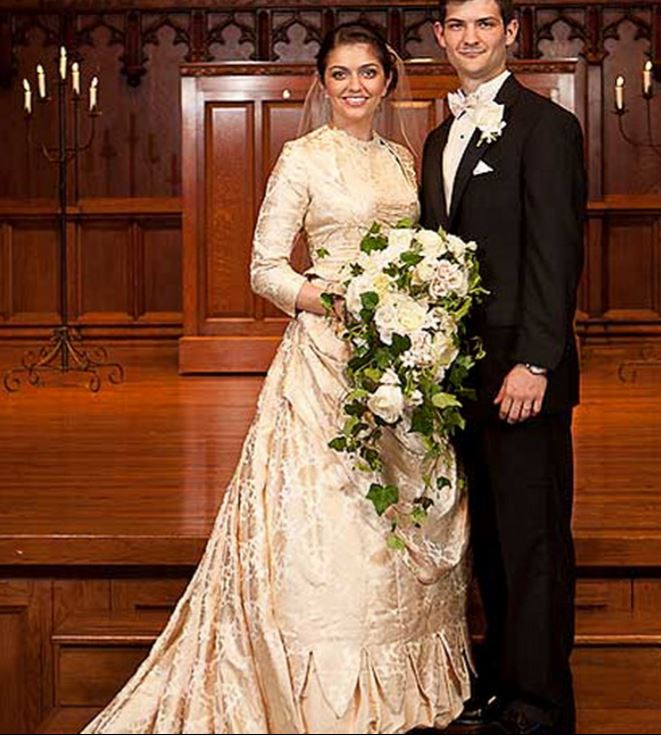
  • Case in point, why do wedding dresses get passed down and worn by the next generation? Allison Rinaldi wore her great grandma's.

Source: Ecouterre


  • Patagonia and The North Circular develop an emotional connection between their clients and the product through customer stories, and maker stories, respectively.
  • Companies such as Project Repat, provide services to enhance that connection by remaking things, in this case cherished but worn out t-shirts, into quilts.

Meet your knitters at The North Circular


#3 Design for Repair


Today, most wearers don't typically repair their clothes, but then they probably don't notice the plastic packet of buttons or swatch of fabric that comes with it. We need more than that to nudge people to repair their clothing.  In fact some companies such as Patagonia and Nudie Jeans offer free repair services for their clothing lines as part of their customer service. Others even offer a full repair guide on on-line!


Next week I'll be looking at how the fashion designer can contribute to the circular economy. Stay tuned!


Design for Minimal Waste (Pt 1)

2 comments
Design for Minimal Waste (Pt 1)
minimal waste design


"Designers have privileged access to the production process since they are responsible for specifying up to 70 percent of subsequent material and production processes in any given project. " Source: McAlpine


As a little girl I used to watch my mother sew dresses; she would take her time to ensure that the patterns were laid out in such a way on the fabric to minimise any potential waste. She would pause,  do some mental arithmetic and then go back to placing the patterns. I'm sure there's a formula for this!

"You don't want to waste something that is so beautiful and costs money" 

It's true, why do you want to chop up a piece of fabric only to have most of it end up in your bin?

Design for Minimal Waste

15% of textiles end up on the cutting room floor, but consumers also throw out a lot more garments every year too, not to mention the newly bought clothes that sometimes don't get worn or end up in the bin.

As designers we can design for minimal waste, impacting both the pre-consumer and post-consumer end of the supply chain. This week we look at the pre-consumer end of the supply chain.

Pre-consumer

Note - The techniques I share below are new ones. In fact, if you familiar with knitting or crocheting, these are both techniques that actually minimise textile waste - you are creating the textile to fit the garment rather than cutting it out from a roll of fabric! For example, some manufacturers have circular knitting machines to create t-shirts. 

#1 Zero-Waste Pattern Cutting
zero waste

Timo Rissanen explored and uses zero-waste pattern cutting. I had blogged about Rissanen in 2009 when he first published his zero-waste pattern cutting concepts.  Basically, an entire garment can be cut from fabric with NO waste, as you can see from this image (courtesy of Timo Rissanen). Isn't this amazing?


Rissanen is not the only designer who explores this concept. Others include Holly McQuillan and Daniel Silverstein who explores different types of draping techniques, which leads me to the next technique which I think is equally amazing...

#2 Subtraction Cutting 


This technique was developed by Julian Roberts.  There is no traditional pattern in Roberts' technique but "the resulting shape of the garment is created by the removal of fabric rather than the addition of fabric and therefore the creation of negative space which the body occupies".  It involves three concepts of the tunnel, plug, and displacement, and the resulting garments are more voluminous and less seams. I think the looks is very experimental though but some of the designs come out great!  My only concern is what happens when you need to do alterations; there are no seams.....

subtraction cutting
Source: Julian Roberts

#3 Transformational Reconstruction

If you are a lover of Pattern Magic books, you might have seen this technique by Shingo Sato. The designs and patterns are extraodinary in the sense that no darts and seams are needed. I'm not sure whether this technique would constitute a minimal waste design, but take a look for yourself here. 

#4 Upcycling Pre-Consumer Textile Waste


Off-cuts, end-of-rolls, cut-and-sew waste (ie the 15%) and the textile samples all can be upcycled into something. Orsola de Castro uses cut-and-sew waste to create her collections, while Alabama Chanin by Natalie Chanin uses off-cuts for some of her signature applique creations. 


alabama chanin
Courtesy of Alabama Chanin

#5 Take a Leaf from Cultural Costumes

To be honest, some of the best zero waste designs are from cultural costumes, and these are based on the rectangle block. Perhaps designers should draw inspiration from these cultures.

Indian Saree 

Sarong wrap 

African Kente

Kimono

Chinese qipao - I added this because before the qipao was influenced by Western tight-fitting forms, it was very baggy and based on the rectangle block. 


Source: http://alphahistory.com/chineserevolution/introduction-to-china/


Next week we look at how the designer can design for minimal waste from the post- consumer angle.


Singapore Waste Statistics 2014

1 comment
Courtesy: Redress Asia

Well, the latest statistics have been released. Thanks to Eugene Tay for alerting me!. Head on over to the link below to find out more. 

http://www.nea.gov.sg/energy-waste/waste-management/waste-statistics-and-overall-recycling

I'm going to zoom into the textile and leather waste. Well, there's not much change with the amount generated and recycled, with both creeping up by 1% from 2013 to 2014.

Year  Generated          Recycled
2013 156,600 tonnes    10%  

2014  158,600 tonnes    11% 

And I've just noticed that the recycling rates for some of the waste streams (e.g. plastics, cardboard/paper) have dropped a few points! Doesn't look too good.  Read more here!

So Why Didn't We Throw it Away?

13 comments
Woohoo, I managed to start my Spring cleaning....slowly but surely it will get done. The latest buzz though is decluttering. I have seen a lot of articles on the internet about decluttering ie how to get rid of things that you don't want.  There's even the Japanese method of decluttering (how different can it be between cultures?) - "The Life-Changing Magic of Tidying Up: The Japanese Art of Decluttering and Organizing" by Marie Kondo. She asks a very valid question when deciding what to get rid of  though, 


and then there is "Stuffocation" by James Wallman who lives by the motto 


"Memories live longer than things"

When I first started the blog train, "I Didn't Throw it Away", I was quite surprised how a number of bloggers interpreted it to mean "hoarding".  It did get me thinking, "Am I a hoarder?" and so I did some research and asked a few friends. 

So, Am I Hoarding?


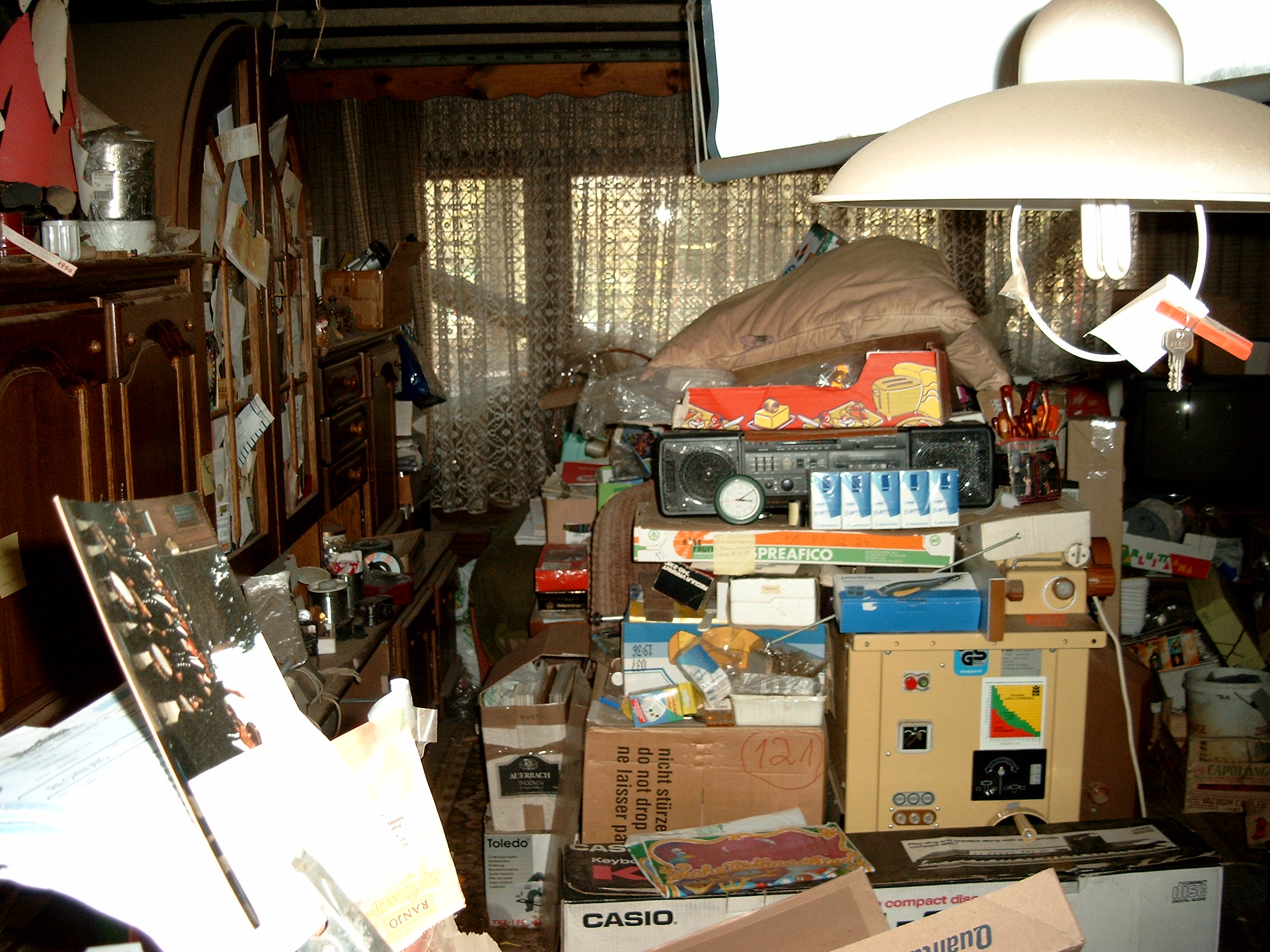
I would say hoarding is a behavioural disorder (maybe medical condition?) during which you have, according to the Anxiety and Depression Association of America "persistent difficulty discarding or parting with possessions, regardless of their actual value". In fact, there are symptoms associated with hoarding including inability of throwing away things and severe anxiety when throwing things away.  Hoarding does impact your enjoyment of life - as a friend put it "if you have several sewing machines that you use for different reasons, or display for their beauty then that's not hoarding ...... But if you have a compulsion to keep accumulating for the sake of it, it constricts your daily life, is a source of embarrassment and brings you no real joy, I would say that is a problem."

I think over-buying / consumption and at the same time not throwing away also contributes to hoarding as well.


So Why Didn't I Throw It Away?

I think the questions "
Is it still useful?" and "Do I still need it?" help me decide whether to throw something away, but as the blog train began, I realised that it was also the memories that we had with these items that made us keep them. 


Quotes from Gingerbread Mum, Peipeihaohao, Dominique's Desk, LapisWilliam and Fafafoom
(from top L, clockwise)

It is interesting how objects become much more than things we use when we know their stories. They now form part of our memories - our darkest hours and our happiest moments - a reminder of what could have been, and a reminder of how we were or had forgotten.  Someone asked but if an object holds many memories for me but I don't have any use for it, can I throw it away? My response would be not to throw it away, but perhaps pass it on to a person who would show the same (if not more) love and care for it - let that person have the joy of creating their own memories and stories with it.


Missed the blog train? Read the posts here:

1 Dec  Green Issues by Agy  
2 Dec  JoeyCraftWorkz 
3 Dec  Gingerbread Mum
4 Dec  Mum in the Making 
5 Dec  Dominique's Desk 
6 Dec  Prayerfull Mum 
7 Dec  My Lil Bookworm 
8 Dec  Simply Me 
9 Dec  Mum Craft 
10 Dec Mad Psych Mum 
11 Dec Growing with the Tans 
12 Dec Mums the Word 
13 Dec The Kam Family  
14 Dec PeiPei.HaoHao
15 Dec Xavvy-licious  
16 Dec Adopt an Ami 
17 Dec Angel Hearts Crafts 
18 Dec Lapis William  
19 Dec Rhinestic's Knick Knacks 
20 Dec Hello, Mrs Tan

Christmas Break!!

2 Jan  Rude Record 
3 Jan  Refab Diaries  
4 Jan  Creating My Way to Success 
5 Jan  Recycled Fashion  
6 Jan A Vintage Crafty Adventure   
7 Jan Cucicucicoo     
8 Jan Sum of Their Stories    
9 Jan Fafafoom     
10 Jan Vicky Myers Creations
11 Jan Little Did You Know 
12 Jan Mountainsno
13 Jan Penelope Cake Fashion
14 Jan The Little Treasures
15 Jan Swoodson Says
16 Jan Notes to Ginny
17 Jan Purfylle  and  Feather's Flight


Are You Decluttering?

4 comments
Spring Cleaning Cartoon


Wait, are you Spring cleaning (are they the same thing?) ?  What do we do with all the clutter that has been cleaned out of our homes? And then when the wardrobes and shelves are tidied and cleared of all the stuff that we don't want, will we continue to consume and replenish them with more things only to repeat the cleaning ritual again next year?

Stop to think for a moment!

When you Spring clean this year, remember it's not about throwing things out, it's about reminding yourself not to buy another bag, another little black dress or another set of golf clubs that you really don't need. Besides, do you really want to spend so much time decluttering?  What do you think?

After thought: People always talk about decluttering as a way of leading a minimalistic life, but to be a minimalist you need to minimise purchasing stuff!


I Didn't Throw it Away!

23 comments


It's the launch of the I Didn't Throw It Away Blog Train, and I am trying to unlock the reasons why we keep certain things yet readily throw away others. Is there a story behind every item that we keep? How do we form that special connection with them, and why does it last so long? Every day from today until January, one blogger will share with you the things that he/she has kept for over 20 years, the stories behind them and why it wasn't thrown away. 

To kick everything off, the blog train will start right here!  For all the posts in this blog train, please click here or on the icon at the top!

There are quite a few items in my household that are over 20 years old. In fact we still use them and I am really amazed that they have lasted so long. You have probably seen a few in my earlier blog posts  - the thin leather belt that my mum had worn when she was a young lady, and the stuffed toy that my grandma gave me when we first met. 


I've never threw these in the bin - the monkey is still on my bed as it reminds me of my gran, while the belt is still in good condition and I have worn it countless times. I think I didn't throw away the belt because it is unique and it's at least 40 years plus!  They don't make them like this any more!

Childhood Books

I didn't own that many books when I was a child. In fact, my dad encouraged us to use the library (something I still believe in) - he said it was a waste to buy books, read them once and then leave them on the bookshelf, plus we couldn't afford space for books in our small flat!  These are the three books that I owned as a child. If I remember correctly, these were birthday presents.


I loved reading the books and didn't want to part with them even when the family shifted homes and we needed to clear out some stuff . I think my attachment to the books is because of what my dad had said about knowledge (ie books) should not be thrown away, my dad gave me his books (all academic) from the 50s and 60s, so I have a little collection of his. I actually used one of the books (trigonometry) to help me in my A-level maths because it explained everything clearly compared with my school texts!  I'll definitely be passing them down to my son!


Vacuum Lunch Flask

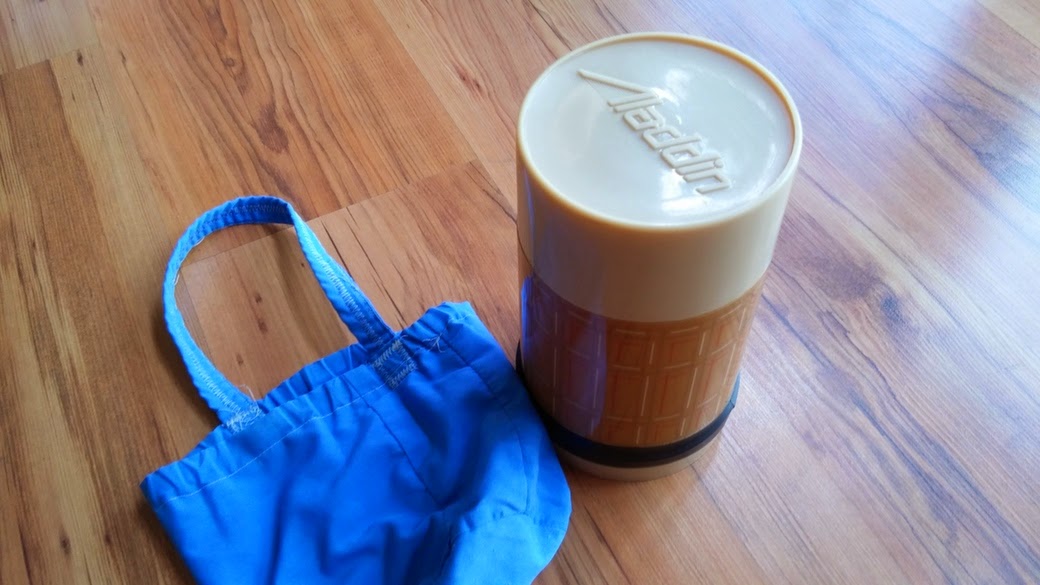
When we lived overseas, we experienced cold winters. As our school tuck shop did not provide proper meals, I would take a lunch flask with my hot lunch to school. I remember mum waking up early in the morning to prepare our lunches and store them in this Aladdin vacuum flask.  Mum made a small pouch to go with it!  


Yes, I still have it, and yes, I actually used it when I started working! It still works and it is in tip top condition. I used it again when my son was on his first solids!  This is the only vacuum flask that I have used. 


It was made in Nashville, Tennessee. Apparently, the factory no longer exists but production has shifted to another part of the USA. 


Why Didn't I throw Them Away?


I definitely have a strong connection with the three books, and they bring back childhood memories. Whenever I read or show them to my son, it's my way of sharing with him my best childhood experiences. Even the vacuum flask conjures up images of my mum's creamy corn soup, and steaming hot soy sauce chicken with rice on a cold winter's day. 


Follow the Blog Train

This post is part of a blog train hosted by Green Issues by Agy on "I Didn't Throw It Away". We have become such a throw-away society, but there are some things in our households that we still keep. Why is that so? Perhaps this blog train can unlock the reasons behind it! Follow the daily posts on this blog train and read about the stories behind the things we have kept for many years and why we didn't throw them away.  

Tomorrow Joey from from JoeyCraftWorkz will share with us the stories behind the things she didn't throw away. Joey is a stay-at-home mum who loves to craft and sew, and lately she has taken up quilting. 


All posts will be shared on my social media platforms!

1 Dec  Green Issues by Agy  
2 Dec  JoeyCraftWorkz 
3 Dec  Gingerbread Mum
4 Dec  Mum in the Making 
5 Dec  Dominique's Desk 
6 Dec  Prayerfull Mum 
7 Dec  My Lil Bookworm 
8 Dec  Simply Me 
9 Dec  Mum Craft 
10 Dec Mad Psych Mum 
11 Dec Growing with the Tans 
12 Dec Mums the Word 
13 Dec The Kam Family  
14 Dec PeiPei.HaoHao
15 Dec Xavvy-licious  
16 Dec Adopt an Ami 
17 Dec Angel Hearts Crafts 
18 Dec Lapis William  
19 Dec Rhinestic's Knick Knacks 
20 Dec Hello, Mrs Tan

Christmas Break!!

2 Jan  Rude Record 
3 Jan  Refab Diaries  
4 Jan  Creating My Way to Success 
5 Jan  Recycled Fashion  
6 Jan A Vintage Crafty Adventure   
7 Jan Cucicucicoo     
8 Jan Sum of Their Stories    
9 Jan Fafafoom     
10 Jan Vicky Myers Creations
11 Jan Little Did You Know 
12 Jan Mountainsno
13 Jan Penelope Cake Fashion
14 Jan The Little Treasures
15 Jan Swoodson Says
16 Jan Notes to Ginny
17 Jan Purfylle  and  Feather's Flight


no
no