-->
no
no
Showing posts with label eco dye. Show all posts

Eco Printing with Leaves #2

No comments
Eco Printing with Leaves #2
Ecoprinting with leaves

Recently, I've been obsessed with trying to get the leaf prints (aka botanical prints) to just print well and clearly. Most of the time it's either been a bit of a blur or the unexpected happens. It's all part of the process, but we do sometimes want to have a good print especially when it's going to be on some clothing. 

ecoprinting

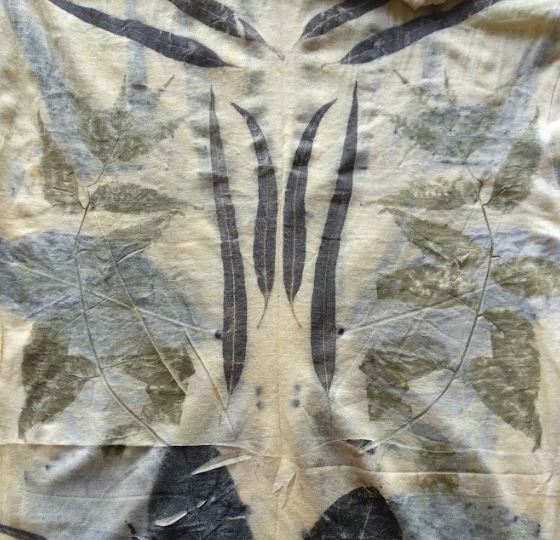
Just last month, I printed eucalyptus leaves onto cotton. The leaves naturally had tannin but the ones that were placed on iron soaked fabric gave a distinct dark colour. On the other hand, I achieved an ethereal look for those soaked in alum and soy milk. Very different effects!


I found the iron soak method gave more defined prints as shown above with eucalyptus, neem and rambutan.  It really depends on what effect you would like so take your pick, and remember, each unroll is like opening a present.  Read more about Tips on Creating Botanical Prints

Eco Printing - Leaves in the Rain

2 comments
Being an artist means observing things that others don't notice.
The small shoots growing on the kerbside, the tufts of grass struggling for sunlight between the tiles, and the flowers scattered all across the pavement from a tree in full bloom. I begin to see how our natural and humans are "living together" maybe not in perfect harmony, but perhaps trying?

Finding My Inner Tortoise

I recently wrote about how slowing down allows me to draw my attention to these tiny details. Taking a walk through the park or even just deliberately looking at things that I wouldn't normally look at has drawn me to sketching and translating them into stitch. I think I can now say that I am no longer tree blind! (pssst - put down that phone!)

sketch book Agy

Leaves on a rainy day

The Wet Season

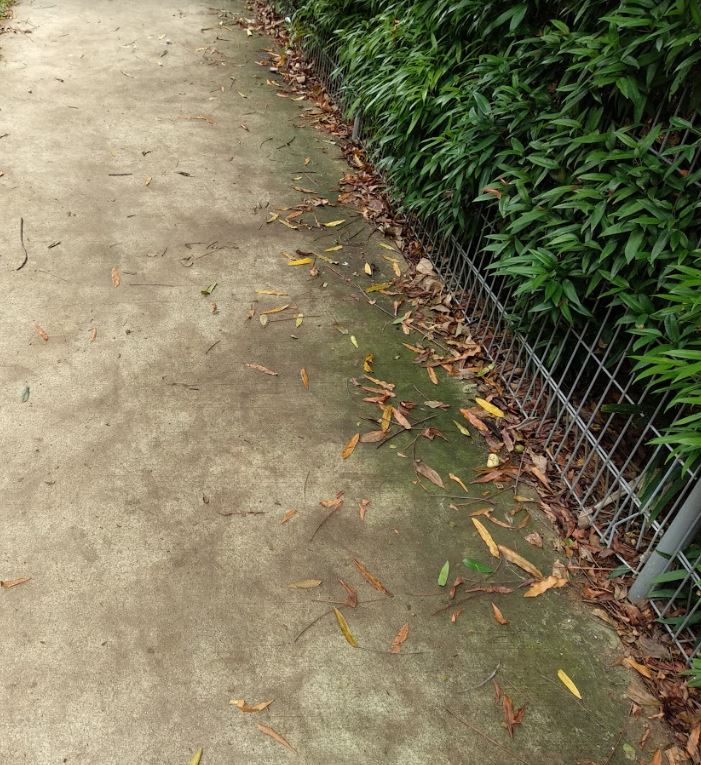
It's been really wet in the last part of the year in Singapore. If you walk past a eucalyptus tree, you'll notice how the leaves make marks on the pavement after a heavy downpour.  It's nature way of communicating with us. After another period of rain, the tannin marks get washed away and new marks get made in their place - different patterns reflecting different moods of the weather!


eco printing Singapore


I wanted to translate and communicate this interaction of nature's marking on our lives through an eco-printed and embroidered piece. I had experimented with ecoprinting but wanted to produce a more subtle and grey look on the piece.  This involved using more diluted iron solution to give a gentler washed out look.  Once the eco-printing was complete, the piece was then layered with hand and freemotion embroidery - this alludes to the complexity behind nature's interaction with us.

free motion embroidery


freemotion embroidery

The final piece is 100 x 50cm. Fear had held me back for a while before I could complete this, but once I let go and just (as my friend told me) "do it because there's nothing to lose", everything fell into place. Even if it doesn't become something I like, I can always put it away for later or use it for something else. There's always a way!

Leaves in the Rain - free motion embroidery

🌱Leaves in the Rain🌱
100x40cm
Eucalyptus leaves ecoprinted on fabric offcuts.
Handstitch and free motion embroidery


Natural Dyes - Rainbow Eucalyptus, Beetroot, Roselle

No comments
Natural Dyes - Rainbow Eucalyptus, Beetroot, Roselle
The weather has been very strange lately, and it's also affecting my natural dyeing process. We are supposed to be well into the dry season but we have been getting alternating hot and very wet weather. This really frustrates me when I am trying to experiment with my natural dyeing. It's really important to plan, but when I decide to forage or start my dye pot, I see dark clouds outside. There was one week when it rained buckets and I only just managed to collect some eucalyptus leaves and bark to experiment. However, the result was so different from the plant matter collected during the dry season (ie during my art residency last year). Nature does have its way of giving us a variety of natural dye colours.

Anyway, I have been conducting more experiments, and this is an update to you all. I'm looking forward to more upcycling with the use of natural dyes!

Rainbow Eucalyptus - Eucalyptus Deglupta

I do store some of my natural dye material in the freezer. They are carefully wrapped or stored in boxes placed on one side of the freezer shelf. My husband has joked that it's now become a garden - yes, very funny (not). Last November, I managed to take a trip down to the Tanjong Katong area to visit GUILD, which is way in the east of Singapore. Along the way, I stopped by the  Katong Park because I had read about the rainbow eucalyptus tree (aka Mindanao Gum, eucalyptus deglupta) and also I thought it was about time I explored other types of eucalyptus.

Eucalyptus


The rainbow eucalyptus tree at Katong Park has been classified as a heritage tree, probably because it was planted when the grounds was an army fort during the British colonial days. As you can see from the picture, it's not called a rainbow eucalyptus plant for no reason. I was only able to get a close up of the tree - it's huge - as the park was undergoing renovation.

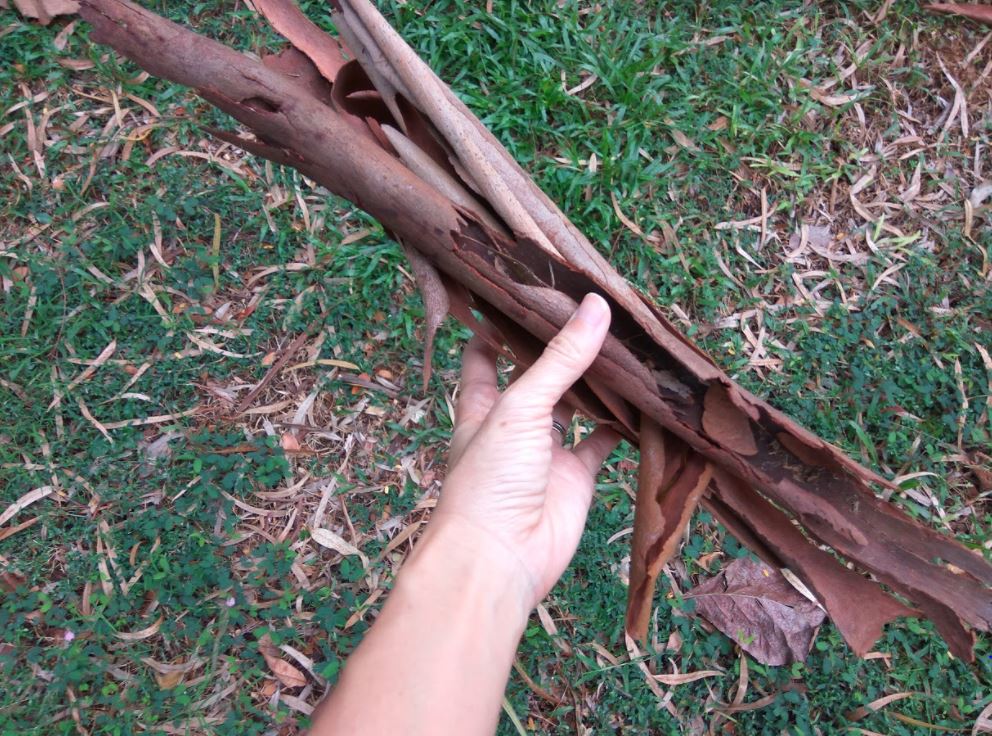
I managed to get some fallen bark, and because I had difficult identifying the leaves on the ground, I was unable to collect any that I could confidently say are of the rainbow eucalyptus. I need to try harder.

Once I put the bark in the pot, I was thinking how fun it would be to get a rainbow of colours from the tree bark - the greens, reds and browns. In the end, I managed to get a beautiful deep brown. I didn't expect anything other than that.

Natural Dye Workshop Singapore

Beetroot

I think beetroot like the red leaf hibiscus  was a disappointment. The swatches of fabric faded within 3 days of being dyed with the beetroot waste from the Native bar. Wouldn't it be good just to produce a red from natural dyeing? I definitely need to explore more.

Roselle 

Roselle is a fruit that's very common in south east Asia. We use the fruit to make a red drink called roselle hibiscus tea, and it is said to have medicinal powers! I'm not sure about the medicinal value but it sure does taste like a healthier version of Ribena.  Anyway, since it gives a red colour why not try making natural dyes from it, right?  I had obtained some dried Roselle calyces from the zerowaste bar, Native and got into action.


I soaked the calyces in hot water and dyed 3 pieces of prepped fabric that were then:
a) kept in my notebook for one month
b) hung in the sun for one month
c) washed in water 4 times over a period of a month

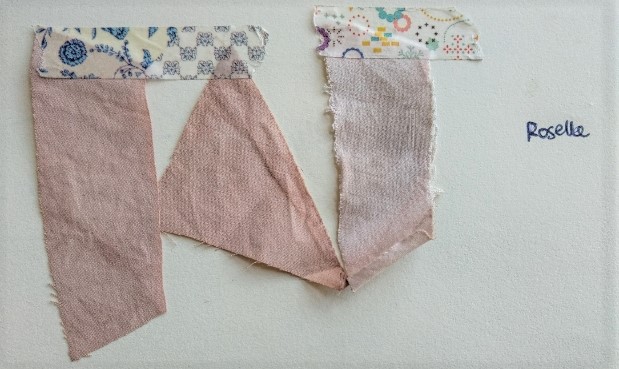
I noticed that although the Roselle gave a distinct purple red, it did fade in water. This is very unfortunate, but I think the pieces would be good for wall hangings or anything that does not involve washing.

Natural Dye Workshop Singapore
(L to R - in the dark, in the sun, washed frequently)

Are you interested in coming for my next natural dye workshop?

I am working with GUILD again to bring you another session on 15th July, 11am at Funan Showsuite.   We had such a blast at the first session on 5th May (as you can see in these photos).  Natural dyeing may sound daunting but I guide you guide you step by step on how to use the power of the sun to create your own beautifully dyed mini furoshiki handkerchief ready for you to wrap your bento box or carry your barang barang.

Once you learn this technique, you can start your dyeing at home! Sign up here.

Natural Dye Workshop Singapore

Natural Dyes - Colour Fastness

No comments
It has been more than two months since my natural dye experiments during the art residency at L'Observatoire. I decided to take a break (it was Christmas and New Year) before going into it again, but during this gap I had to do a few tests to determine the colour fastness of the dyes.

So far my tests include:

  1. Mango leaves, Mangifera indica. L. - yellow green
  2. Rukum masam, Flacourtia inermis Roxb - muted pink
  3. Eucalyptus leaves (immersive and eco print) and bark, Eucalyptus camaldulensis Dehnh - rich brown
  4. Golden shower tree pods, Cassia fistula - pale brown
  5. Yellow onion skins - deep orange
  6. Red onion skins - pale orange
  7. Coffee grounds - very pale brown
  8. Avocado seeds and skins - tones of pink
  9. Blue pea flower, clitoria ternatea - blue
  10. Dragon fruit - pale pink

Colour fastness is the ability of the dyed material to resist fading due to light or water.  To test for light, I covered half of the swatch with foil, leaving the other half exposed. For the water fastness, I sewed individual swatches onto white cotton fabric and laundered the swatches in the washing machine.  In fact, I washed them in the same manner as I would normally do with my clothes.  The objective is to see whether the colours would fade, run or even transfer onto other clothing. 

Colour fastness to light.

The colour chart comprised screen printed natural dyes (the squares), and swatches of dyed fabric covered in half with foil. The chart was exposed to indirect light from 4 November - 9 January 2018.

Observations:
  • Screenprinted swatches 
  1. fading observed for tumeric, eucalyptus leaves, blue pea, dragon fruit.
  2. colour change from pink to brown for rukum masam
  • Immersed swatches
  1. fading observed for dragon fruit and blue pea
Images below, before (L) and after (R). 
Natural Dyes - Colour Fastness

Natural Dyes - Colour Fastness

Natural Dyes - Colour Fastness

Natural Dyes - Colour Fastness


Natural Dyes - Colour Fastness

Natural Dyes - Colour Fastness

Natural Dyes - Colour Fastness

Natural Dyes - Colour Fastness

Colour fastness to water

After 4 rounds of washing the swatches in the washing machine (with drying in between), I opened up the fabric to see the result.

There was transfer of colour from the dyed swatch from the yellow onion skins (acidic) and tumeric. I was pleasantly surprised that the rukum masam did not wash off.


Colour fastness - Natural Dyes

Note:  I wish I had done this better and used my knowledge in science - always have a control rather than rely on photographs. As you can see, the lighting was not ideal.

Artist Residency - Week 1

No comments
Artist Residency - Week 1
Sometimes you need a change of scenery to make things work, to get those creative juices flowing, to just start on a new upcycling / sewing project! Well, I got that opportunity courtesy of my artist friend,  Isabelle Desjeux. She very kindly allowed me to use her beautiful studio, L'ObservARToire, for the whole of October (in fact she has a line up of artists using her studio). I am really excited because it is nestled in a quiet part of Singapore, away from traffic, away from the crowd! 

What I Will Be Doing - Reimagining

I will be reimagining nature, reimagining food waste, and more importantly, reimagining textile waste.  Everyday, I will be foraging in my neighbourhood and around the studio for leaves, bark and even food scraps! It has started off well, and we have even managed to get the children from the Blue House International School to bring in some food scraps. So this month is all about upcycling, sewing and natural dyeing. 

Why food waste?
We throw out so much food from ugly vegetables, expired produce and waste from the kitchen. Some people use their kitchen waste to make compost, but why not see what they can offer in terms of colour? By the way, food waste is a huge problem in Singapore. According to National Environment Agency, it accounts for 10 percent of the total waste generated while only 14% of it gets recycled. 

Why nature?
Nature has a lot to offer to us - a relaxing environment, food, shade and services. But they also give us rich earthy colours.

Why textile waste?
We just have too much textile waste be it clothing, linens and furnishings. Just take a look at our thrift stores - we are just drowning in our own clothing.  According to a recent documentary by Channel News Asia, The Salvation Army in Singapore receives 10 tonnes of donations of which 60% is clothing. And this amount increases to 60% during peak periods such as festive seasons! Throughout this residency, I will be using old hotel bed linen purchased from Hock Siong and old bed linens from Raffles Hotel (I must thank Muriel Boutin-Becuwe for helping me reach out to the hotel and getting their management to agree with passing them onto me for upcycling).

Art Residency - upcycling, sewing and natural dyes


What's Happened During Week One

Week one was all about settling in, and can you believe that I forgot about my sewing machine during the move? I remembered my pots and pans, but the sewing machine got left at home. Anyway, it happens - I am getting old.

How do I feel?

  1. To say I feel ecstatic might be an understatement.  I am very happy to be in a work space without my family telling me to clear up my things after a project. Not to say I'm messy, but knowing that I have a wet and dry work space for my natural dye and sewing experiments is liberating.   
  2. I feel relaxed. The view is amazing so every time I need to take a rest, I just look at the view and take a deep breath - aaaaahhhh. 
  3. I feel inspired. We are so close to nature, so it's a great place to be foraging for my leaves, flowers and bark, but it's also an inspirational place too! We are also within the Blue House Nursery and International Preschool, and they have a great kampung (Malay for community) spirit, they have even agreed to contribute to the kitchen waste for the dyeing. 

Eucalyptus Bark and Blue Pea Flower (Clitoria ternatea)

I dyed the sheets using the eucalyptus bark from my neighbourhood park, and I started to collect the blue pea flower from the hedges surrounding the school grounds.  You might remember the last time I tried eucalyptus, and this time around I still get the rich earthy tones of the bark. I'm so glad I was able to replicate the results but important learning points this time around are:

Natural Dyeing with Eucalyptus Bark

  1. Not to be greedy and stuff too much fabric into the pot; this results in uneven pigments on the fabric. Ideally, I should have a huge vat that is as tall as me, but alas.....
  2. Keep stirring and watch the temperature... and time!
  3. It might be possible that bark (or even leaves) collected during different times of the year produce shade of brown? I will have to try this out.
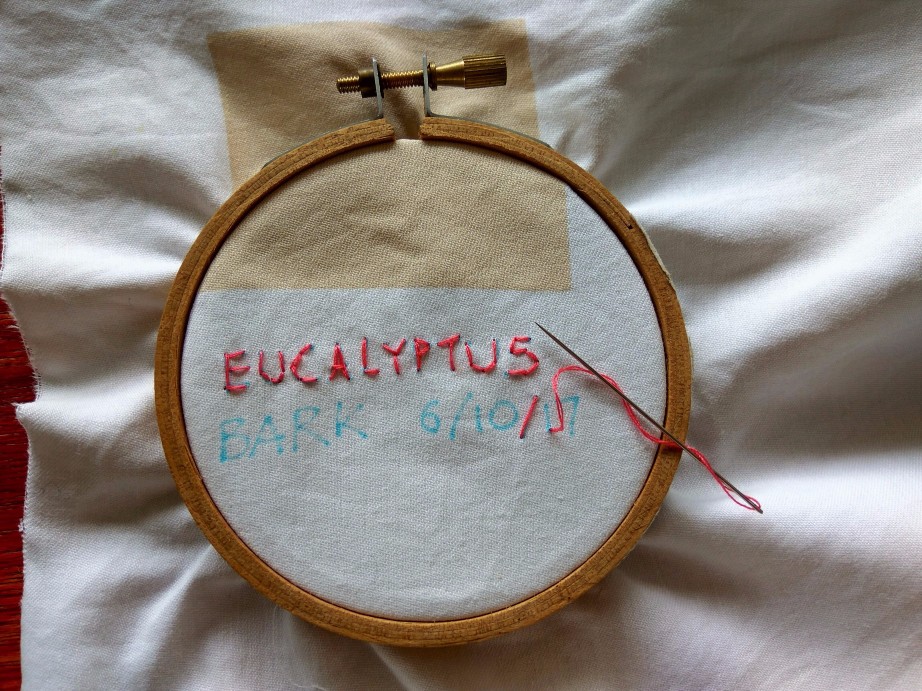
  4. Always remember to label your samples and cloth prepared for natural dyeing. Preparing the cloth takes at least one and a half days so I take notes and label. I am still trying to figure out a good way to do the labeling. 

Natural Dyeing with Blue Pea Flowers

Here are the results of the eucalyptus with immersive dyeing and screen printing.
Next is mango leaves and rukum masam!
Stay tuned for week 2.
Oh, I think I should start some stitching.

Natural Dyeing with Eucalyptus Bark

Natural Dyeing with Eucalyptus Bark


Read up on Week 2 & 3 here. 

Dyeing with Mango Leaves

1 comment
Dyeing with Mango Leaves
This is the latest update on my natural dye journey and how it can be used to upcycle our clothes. So far, I have tried eco-prints but haven't ventured into immersive dyeing.

Mangoes are one of my favourite fruits, and they are sometimes known as the king of fruits, the other one being durian (although some people dispute this and say durian is the only king!). The sweetest mangoes are grown in India and Pakistan, and the best ones that make a mean mango pudding are those that are over ripe. Unfortunately, the mangoes (mangifera indica) that grow along the roadside in Singapore are very sour, but my friend says they are very good for making pickled mangoes. I haven't tried making pickled mangoes, but I was very curious about the colour mango leaves produce.

Dyeing with Mango Leaves

Mangiferin

I did not know what to expect with the green mango leaves that I had collected from my local park, but the mangiferin in the leaves is known to produce a range of yellow to brown colours depending on the type of textile and type of metallic mordants used. Even my cat, Ajay, was beginning to get curious with all the leaves on my workspace - he's so used to having the sewing machine.

Dyeing with Mango Leaves

Preparation

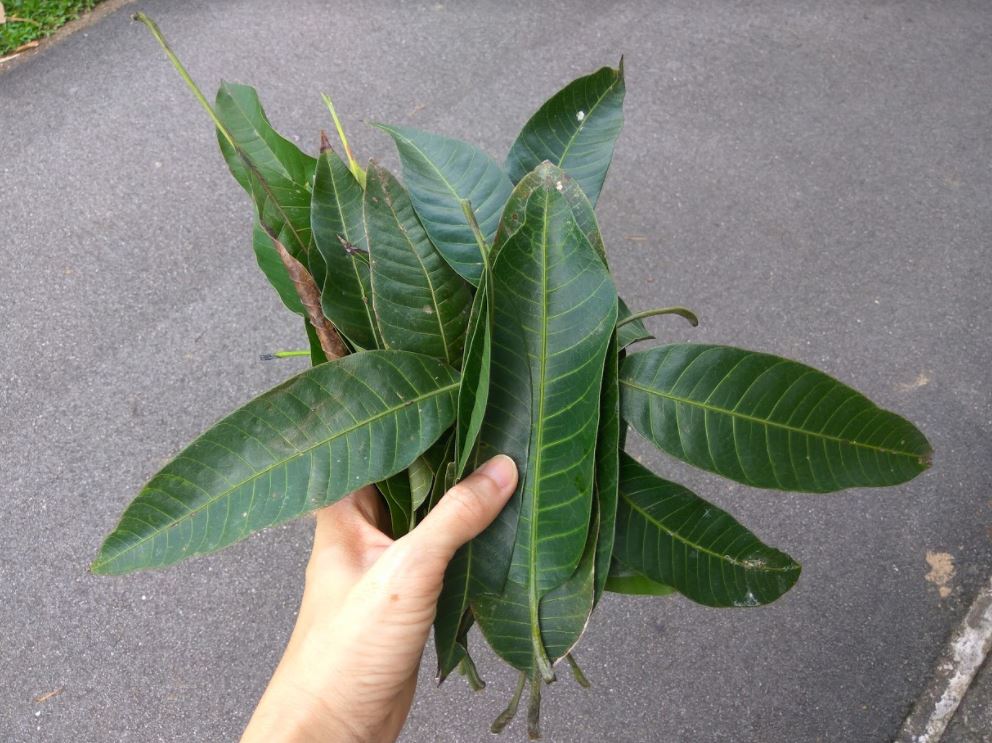
The leaves collected from the mango tree were already on the ground and had an intense green colour; I did not collect the dry or brown coloured leaves. These leaves were washed in cold water to remove dirt and any insects before cutting them into small pieces and placed in a pot.

Dyeing with Mango Leaves


Harvested: 146grams
Amount of water: 1.5 liters
Simmering time: 2 hours

I left the pot overnight before trying out a few dyeing techniques - immersive and shibori - with old cotton bedsheets (treated with soy milk) and an old silk handkerchief.

Silk versus Cotton

I found that the silk took up the colour very readily. The cotton, on the other hand, was rather difficult and the colours were not even. I tried some shibori with clothes pegs as well and was happy to see the patterns that it created.  I basically had a long rectangular strip of the bedsheet which I folded in half length wise, before carefully folding it into a triangle.  The clothes pegs created little white patches on the fabric.

After the initial round of dyeing, I decided to add less than 10ml of iron rust to the dye pot and further simmered another piece of cotton. The rust had caused the wheat-coloured dye to become a dark brown. I initially thought it was black, but after the fabric was dried, the colour became a dark brown.

Dyeing with Mango Leaves

Dyeing with Mango Leaves - Shibori
Dyeing with Mango Leaves
From left to right: mango leaves on cotton, silk handkerchief, mango leaves plus iron on cotton

Dyeing with Mango Leaves
Outcome of the shibori


Working on My Next Project

The lessons I learned in the project is that
a) green leaves don't produce green
b) natural colours take time to be extracted from the leaves and adhere to the textiles
c) immersive dyeing brings out different colours compared with eco prints. You might remember the eco print that I did just a few weeks ago.

Eco printing with leaves
Eco printed leaves - note the mango leaf at the top right hand corner


Why am I excited? Well, I am looking forward to applying these colours to my next project, an installation involving stitching and getting the public closer to nature. Stay tuned for my next blog post with eucalyptus!  Do take a look at my dye experiments with the eucalyptus bark.

Natural Dyeing with Eucalyptus Bark


This post is part of the Shibori Indigo Dye Week organised by Stephanie of Swoodson Says. Check out the other posts this week.

Monday 7/24 Sarah at Sewing with Sarah - Shibori Top  Stephanie at Swoodson Says - Shibori Kit Review
Tuesday 7/25 Katie at Creative Counselor - Shibori Shift Dress Sara at Radiant Home Studio - Shibori Zipper Pouch
Wednesday 7/26 Vicky at Vicky Myers Creations - Shibori Scarf Stephanie at Swoodson Says - Shibori Blanket
Thursday 7/27 Maryanna at Marvelous Auntie M - Shibori Bag Ula at Lulu & Celester - Shibori Clutch
Friday 7/28 Laurel at My Heart Will Sew On - Shibori Maxi Skirt Agy at Agy Textile Artist - Shibori with Mango Leaves Stephanie at Swoodson Says - Shibori Curtains
Discovering Local Dyes - Mango and Eucalyptus

No comments
Discovering Local Dyes - Mango and Eucalyptus

What's On Your Doorstep?

It's very interesting to see what you can find in your natural environment. When I started my dye journey at the beginning of this year, I was a little frustrated that most of the research was based on plant dyes based overseas.  Did that mean I would have to import my colours from another country? Surely there are colours that Singapore can offer.

Singapore relies heavily on its neighbours for a variety of goods, including food and products that require natural resources.  The last I heard it was 90% of our food is imported, and when I read about Qatar being cut off diplomatically, it was very unsettling to know that one day we could be in a similar situation. Imagine having food shortages! How can we rely less on imports? Could we rely on the circular / sharing economy? We have secondhand clothes, used furniture and thrift stores, but what about our food?

I have recently discovered a whole community who are challenging the norms that our food has to be imported, and they are growing their own vegetables in roof top gardens and in communities. There are others who are encouraging foraging.
Mamakan

Rediscovering My Neighbourhood

I was really excited to find a whole cluster of mango trees and eucalyptus trees, and yes, all in my neighbourhood. To be honest, I hadn't noticed them until I decided to take long walks in the park. I found beautiful green mango leaves, long eucalyptus leaves and eucalyptus bark on the floor of the park. It felt like winning the lottery and these were bagged, washed and dried when I got at home.

Eucalyptus trees

Eucalyptus bark and natural dye

Mango leaves and natural dye

Mango And Eucalyptus

The next step for me now is to experiment how these beauties translate into colours.  It will be exciting because I will be using them as part of my next project with Design. Stay tuned for my next post!

Natural Dye Upcycle Project

3 comments
Natural Dye Upcycle Project


Dyeing is a very exciting journey.
You can transform colours. You are the artist. 
My first was the shibori project involving my UNIQLO dress, and I also had a taste of dyeing with batik colours, transforming a well-loved white top into a myriad of colours. These upcycling projects used less natural chemicals, but they still enabled me to make my clothes last longer!

Batik Upcycling DIY

Eco Prints and Natural Dye

I have been experimenting with combining upcycling, ecoprinting and dyeing.
I had put aside my "zombie apocalypse" top that I had upcycled using an old white organic MUJI top and the ecoprint method. Local cherries and onions were wrapped inside the organic cotton and bundled off into the steamer. I had high expectations, but what you initially see when you bundle the garment, is not what you get after the steaming. I had forgotten that:
a) plant / vegetable colours become "sadder" after the garment is cured. The brilliance of the cherry red faded to a mere pink. I felt a little cheated but I think I it was because I just hadn't done my homework. 
b) less is more. As you can see in the video below, I had gone overboard. Encouraged by what I had seen in youtube videos, I decided to copy the tutorials. Unfortunately, I didn't get what I wanted, but you learn from your mistakes.


So this is what the garment looked like immediately after the unrolling - notice the hues of green and deep reds? Well these all faded into a bloody orange and red, while the green just disappeared (see right of the picture).  I honestly thought that the colours were fine, and I quite liked the look until someone mentioned it looked like blood. It didn't help that I was having my period at the same time too! Can you imagine what I saw when I was changing my soiled flannel?
Ecoprinting and upcycling

To be honest, I am not too sure why the green disappeared - I had read that the kumquat leaves would impart a deep green to cotton. Either I hadn't done the eco printing correctly, or I had acquired the wrong type of leaves. 

Agy Textile Artist

Needless to say, the overwhelming majority of my friends said, "zombie apocalypse"  and "crime scene". Many suggested that I try doing some stitching on the top to give it dimension but I did feel that the red from the onion and cherry was very overwhelming and any amount of stitching wouldn't be able to save the garment.

Rust Dye

It took me a while to figure out what to do. I put the garment to one side and was deciding between redyeing or stitching. I decided to do both.  The first step was to immerse it into the rust solution (basically an iron mordant that you can make with vinegar, water and rusty nails). It was very scary at first as rust can eat away at the fibers and basically destroy the garment. So,  it was a case of a quick dip, in and out, then drying and repeating it a second time before rinsing and immersing in salt solution to make the colours last.  The result of this process was shades of grey and brown. 

Eco printing, natural dyes with onion and cherry

The onions became a very dark grey, while the cherries gave a dark reddish brown.

Stitching the Garment

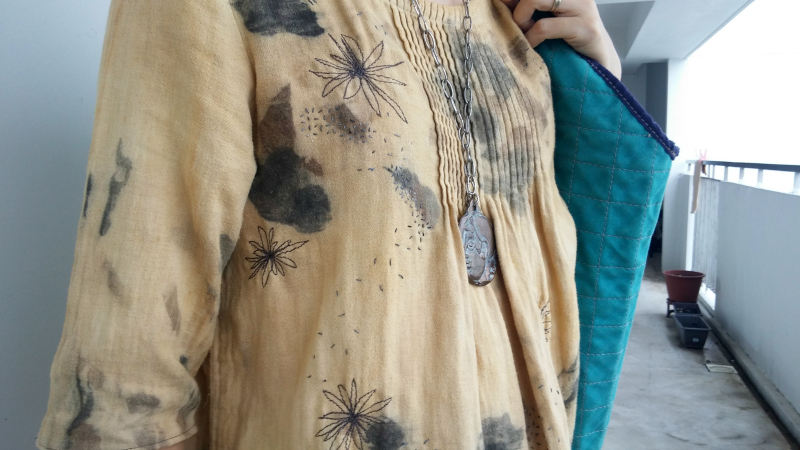
After dyeing and curing the garment, it was onto the stitching. I was inspired by dandelions and the seed dispersal during spring. So it was back the sewing machine for some free motion embroidery with dark brown #30 Gutterman thread. I ended off with some handstitching using a variegated #12 Aurifil thread for the seed dispersal. 


Free motion embroidery and handstitching

Patience

This garment upcycle took longer than my usual projects. In fact, I have noticed that my projects are taking quite a bit of time compared with my sewing from a few years ago. It was disheartening but I have observed that I am at a very peaceful stage with my work - I can't panic, I need to be calm.  It was very reassuring when I read this article in the BBC Art website detailing the work that goes into making a traditional Japanese kimono. It takes one year, and one of the weavers, Mifuko Iwasaki says

"Calmness is important.  If we mess it up now all the work until this point will be for nothing ..... If you’re not in a peaceful state of mind it will show in your work." Mifuko Iwasaki

How important these words are to me! Take time to do your work, don't rush, and even better, be calm. 

How do you ensure you don't mess up your work?

Upcycling with eco dyes and embroidery

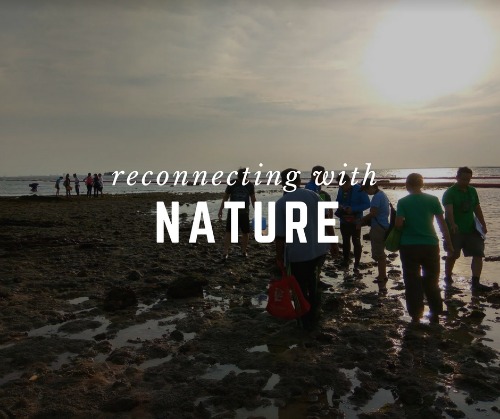
Reconnecting with Nature - Eco Dye

2 comments
Reconnecting with Nature - Eco Dye
Happy new year everyone! I cannot believe how fast 2016 went. For me, 2017 will be all about embracing slow, taking a step back and reflecting.

Reconnecting with nature


Reflecting is Very Important But...

Don't dwell on the past! Dwelling is when you judge yourself too harshly and the introspection goes haywire like a record on repeat. Stop! Reflecting is all about looking at what was good, what was bad and then LETTING GO. Making the improvements that you need and MOVING ON.  Would a walk in the park help?


"A Concrete Jungle Destroys the Human Spirit"

My friend, H, started illustrating nature. I saw her sketches of the birds she spots during her nature walks and thought how relaxing it would be. On my way to work last year, I decided to take more notice of what nature has to offer. We may be a city, but the trees that we have along the roads offer some respite from the concrete jungle. In fact, nature has a positive impact on our well-being, not to mention provide loads of inspiration to creatives (think the Bronte sisters).

"A concrete jungle destroys the human spirit" Lee Kuan Yew

When I am taking notes and making sketches in nature I notice how this process that evolves has a calming effect on me. But it has also made me realise that no matter how well intended our actions of reduce, reuse and recycle (the 3R mantra!) are, we sometimes forget that the main intent is not to create jobs, not to get the economy to grow year on year, but to protect what little fauna and flora is left. The rest is just secondary.
My recent visit to Pulau Merambong just off the coast of Singapore couldn't have left me feeling anymore so. It is full of marine life but unfortunately its existence is being threatened by recent reclamation works. In fact our tour guide mentioned that the rich diversity of species there would mostly likely disappear by 2018 - we saw seagrass, seaweed, anemone, mangroves and crabs.
On a more personal note, I have been asking myself should my work also reflect the beauty of our surroundings so that others would at least start to appreciate them?

free motion embroidery
My interpretation of Sea Anemone


Eco Dye

My thoughts turned to eco dye expert, Terriae Kwong, who I had interviewed several years back.  I contacted her and met up with her during my trip to Hong Kong. During my meeting with her, she was kind enough to share with me her process. I definitely learnt a lot from Terriae and here are some key pointers:

Eco dye with Terriae

#1 Know Your Plants 

I take this whole process of eco dye as an opportunity to know your flora. Terriae knew her eucalyptus leaves from her Chinese tallow.  Each type of leaf and flower imparts a different colour to the fabric it touches.

#2 Be Patient

This is something that can't be stressed any further. Slow clothing is all about, well, SLOW! The process of eco dye can take up to 4 hours or even more.  It's your opportunity to appreciate what you are doing too.

#3 Appreciate Natural Fibers

Terriae explained that it was important to use natural fibers in eco dyeing. While blends are good, she went on to say that dyes from leaves are brighter on non-synthetic textiles. If you are looking at changing the colour of synthetics, sublimation is the best.

Eco dyes can be toxic - wear gloves!

#4 Safety is Important

Although we associate eco and natural as being non-toxic, this is not true. Natural things can be toxic, the eco dye process can be toxic especially with the use of mordants. Wear gloves, work in a well-ventilated area - I don't think I can stress this any further. Terriae highlighted the need to do this and to ensure that her beautiful cat, Mogi, didn't eat her materials.

Terriae and Agy after the eco dye process

#5 Appreciate the Unexpected

It's like opening a present. As what I said before, there will be surprises and you don't know what the effect will be. Don't be disappointed if it's not what you are looking for but perhaps, like life, you can turn something disappointing into a positive!


Do you remember this post? Remember to check it out!
how to be an explorer of the world
no
no