-->
no
no
Showing posts with label behaviour. Show all posts

What Will You Do With Your 80%?

8 comments
What Will You Do With Your 80%?
clothes

Remember in school when your best friend decided on a whim that he or she did not want to be best buddies with you just because? And after that decision, you never spoke to each other again.
Or perhaps, remember when your best friend just became your friend and then both of you drifted apart? Relationships are complex - upon meeting for the first time, there is a moment of excitement and novelty. You spend ages on the phone catching up on the latest gossip, or bond over mutual interests.  But after awhile, that initial buzz is lost and you have one of two choices

1. Move onto someone who will give you a new level of exhilaration; or
2. Nurture the friendship, give the friendship (not the person) attention, and every time you deposit something the bond between two people grows stronger.

Which path would you take?

Our Relationship with Clothes is Like Friendships Gone Bad
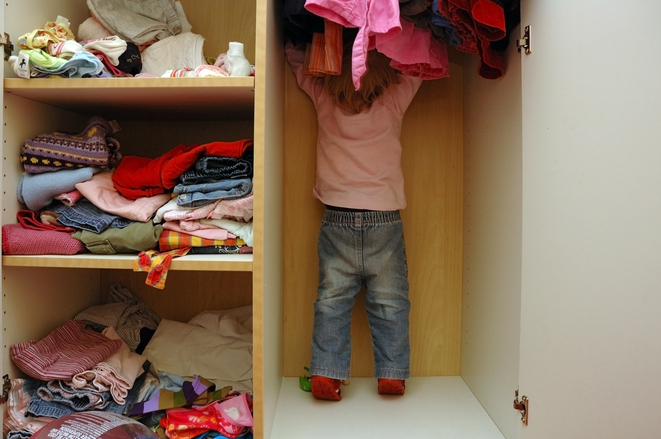
Most of us treat clothes like friendships gone wrong.  Occasionally we have one-night stands - that's the buy (and perhaps wear once) and throw. Sometimes, we wear them less than 30 times and then it gets discarded. But the worst is the impulse buy which gets relegated, tag still on (!) to the bottom of our wardrobe, and sometimes comes back to haunt us.


clothes in wardrobe


We Only Wear 20% of Our Wardrobe. 
In fact, according to this article in the Wall Street Journal, most of us have a closet full of regrets. And even if they are not full of regrets, I think we fell out with the garments that were once our favourites and, unfortunately, never saw them again (lurking in the corner of our wardrobe?). We only wear 20% of our wardrobe. That may be the unofficial figure, but I think this statistic can be more or less validated in any developed country.

Let's Reconnect with Them
Any kind of bond you have with a garment can be reignited. I do that through upcycling and repair. All it takes is to clean out your closet and separate them into various piles:

1. Items that you always wear (that's your 20%!)
2. Items you don't wear because they are just worn out.
3. Items you think you can rekindle the relationship with! Do they just need some repairing?
4. Items that look lovely but you honestly can't mix and match with anything in your 20%.


What about items with sentimental value? Well, if you do wear it then keep it, but sometimes you just have to let it go and pass it on to someone who will love it just as much as you do, and form their own story with it as time goes by. If it's just sitting in your wardrobe, then it's not fashion, it's just wasted!

What's Your 80%?
So, have you figured out what the 80% of your wardrobe is? If you've never worn it in the past year....I think we can safely say it falls within that portion of the pie!
You might be tempted to throw the 80% out, but there are many options to take.

1. Let someone form a connection with them - pass it on, give it to a thrift store / vintage store, share it at a swap.
2. Rekindle that bond - upcycle it into something more wearable, or something else (jeans to bag, anyone?)
3. Last of all, the final option would be to pop it into the recycling bin!

So do you think our relationship with clothes is like our friendships? 
What's your 80%?

Share here!


  • If you're keen on rekindling the relationship with your old clothes, sign up to my newsletter and I will update you on my next workshop. I promise there won't be any spam!
  • We're also having a clothes swap on 18th September and it's your chance to pass on your 80% Details in the image below.
  • Thrift stores in Singapore? My favourites are NEW2U (96 Waterloo Street), which is open Monday to Friday, 10.30am to 2.30pm, and every last Sunday, and the MINDS which runs 5 thrift stores (see link for locations)

clothes swap Singapore

What is Sustainable Fashion Really?

1 comment
A few weeks ago I caught up with my friend Lastrina, and found out that since her COP21 moment in Paris last year (you can read about it here) she has taken great strides to get Singaporeans to be more concerned about climate change, and, more importantly to take action.  She co-founded, Singapore Youth for Climate Action (SYCA) with three other amazing ladies who were also attended COP21 - Melissa Chong, Cuifen Pui and Juliana Chia.  One of the initiatives under SYCA is the Learning and Leadership Programme, which involves deepening youth knowledge on climate-related topics in the local context; and secondly understand oneself better, and enhance skills needed to start movements.

SYCA invited Connected Threads Asia to be resource people during one of the sessions (23 April) and I was very honoured to facilitate the session.  Participants experienced a session of exploring their values, understanding the supply chain of the fashion industry, and working as teams to define what would be the most sustainable garment. For me one of the points that came to mind during the session is how everyone has a different take on what sustainable fashion is. In fact, many people I speak to don't realise that to achieve sustainability in an industry :

a) It takes time. Existing companies are huge mammoth like structures with supply chains that extend across the globe, so change happens a step at a time. Positive changes have been made since Rana Plaza, some people say not fast enough,  but remember because so many parties involved things can't happen over night.

b) Systemic change has to happen and for this to occur, collaboration is needed. And when I mean collaboration, I mean with EVERYONE who is part of the system, including the authorities.  Take for example, a few stores setting up a clothes recycling bins is only a small step, but collaborating with the local authorities to have an official collection .... now that's big impact and everyone can get involved. If you are looking for alternative technologies to recycle mixed textile blends or a create a waterless dye, why not work together with other brands to develop it so you get economies of scale when it comes onto the market. It's a win-win for the brands and the environment.

And then there is this .... the vast amount of information on the internet .... there is so  much that people jump to conclusions and they don't dig deeper. If in doubt, try searching for the information yourself, treat what you see that gets posted or shared with a pinch of salt.

The slack that some brands such as H&M and Levis are getting are a case in point.  Business model aside (yes, I don't like the fact that seasons change EVERY week to promote consumerism) , brands that are making positive changes to their supply chain (be it environmental or from an ethical point of view) and are transparent  about it (varying degrees, I might add) appear to be the ones that are usually picked on. Remember the World Recycling Week campaign? Many people were accusing H&M of being unsustainable and forgot about the things that they were doing for positive change. Rather than point fingers and be a keyboard warrior, why not work together towards something better? Why not get the ones who are not making any change at all to do something?

And what do you think about the backlash to Australian brand Gorman? They posted a #whomademyclothes post in response to the Fashion Revolution Day campaign. Unfortunately, or fortunately, they were called out by the public - their parent company were graded an "F" in The 2016 Australian Fashion Report.  What does the grade "F" mean? What would your response be?


 A lot of the people who commented on Gorman's instagram did not know what the grade "F" meant or did they read the report.  What would you do?

Please note, I'm not defending all these organisations, nor do I buy from fast fashion ones either because I believe in 2nd hand / upcycled or ethically made purchases.  You might not believe in the same things I do, but I do believe that everyone should be well-informed to make the right choices.

Can We Solve the World's Problems with Artivism?

5 comments
"Art is the ultimate platform for sharing important messages and starting conversations around hard to discuss issues. I went to this event feeling, overwhelmed, oppressed, depressed, and enraged with the system that is selective at best around the issue of justice. I left feeling both engaged and empowered. "


Vanessa of SweetLeigh recently posted about her visit to the Manifest Justice Exhibit, Los Angeles, and it got me thinking...


"Can we solve the world's problems with artivism?"


But what is Artivism?

Artivism is art used to convey messages and emotion, push for change, and bring about awareness to issues such as environmental, social and even political. 

Here are some examples of political artivism that I witnessed on the streets of Hong Kong during last year's Umbrella Movement. 


Lennon Wall

Artivism is a powerful medium

Art evokes a lot of emotion;  think about how a singer's voice can move millions, or how the Lennon Wall encouraged protestors to stay strong. It doesn't matter whether it is a painting in a museum, a song, a movie or street art, artivism is a powerful medium. 

When a message is beautifully expressed through art, it gets people thinking and it starts a conversation!

Art is also documented, and so even if the movement has physically stopped, it continues to live on through these pieces. 

Artivism brings people together
The only common language is .... art! 

Artivism is a voice for the environment
Environmental artivism can be as disruptive as political artivism.  One of the most powerful pieces of environmental artivism is the Dying Swan, a Green Peace ballet performance against fracking. 


I think this is one of my favourites. It was part of the UnEarthed Exhibition in Singapore (Singapore Art Museum). Singaporean children are under immense stress due to the pressures to excel in school. The artist likens it to a piece of knitting - a lot of tension! The knitting is also green to highlight that our environment is also under stress the same way our children are, and of course, it is all due to man.

The effects of Singapore's environment on children
Another installation that really hits home is the mountains of clothes "7.5 tonnes" exhibited at the Star Ferry in Hong Kong by Redress Asia a few years ago. Can you imagine the impact of this on people? Do you think they will feel affected to the point they will feel empowered to do something about it?


Redress Asia


What do you think? Can we solve the world's problems with artivism?

Oh behave!

No comments
It's been a long 2 weeks since I last blogged, mainly because of work and secondly my poor sewing machine jammed again as I was doing another reconstruction (will blog about that later!). 

I did come across some interesting sites about behaviour though. Nowadays, governments are trying to come up with schemes/programmes that will help "nudge" the public in the desired direction.  A good example is the gruesome pictures on the cigarette packs to deter people from smoking, or placing recycling bins below our housing estates to get people to recycle. It is difficult though - have you ever tried changing the behaviour of your loved ones? hee hee. 

Here's someone who's actually stealing from a recycling bin instead of actually using it correctly - is there something wrong with the way the bin is designed, or are we sending the wrong message?

This is a picture of the recycling bins just outside our neighbourhood shopping centre. I think the reason why they're used incorrectly is that it's more convenient for the shoppers who've finished their food and drinks to pop their waste there instead of the general waste bin !


The Upside of Irrationality: The unexpected benefits of defying logic @ work & @ home

No comments
Sigh....why can't people like Professor Dan Ariely come to Singapore to talk about behaviour.  It would be exciting if he did -- hint, hint, Professor, if you happen to stumble on this blog, AND read this entry, purleeze can you consider coming to Singapore ? :-)


Well, if you are in London (lucky you) then you can attend his lecture for free (yes, it's free, but you need to get a ticket!!) at the London School of Economics on 27 Oct 2010, 6.30-8pm. 

Ariely's other great book is Predictably Irrational. I haven't read his latest book, but perhaps it will help to explain the things that I'm doing at my workplace.....
no
no