-->
no
no
Showing posts with label Sustainable Fashion. Show all posts

Craft it for the Cats - Help Save Singapore Cat Museum!

No comments
Last year we welcomed a kitten, AJ, into our family. He was 6 months old and so tiny, and had been found abandoned with his siblings in a construction site. When we were deciding whether to get a pet, I had my reservations because I did not know how a cat would fit into my creating schedule. I had fabric, thread and yarn everywhere, and I did not have my own studio. My son had already told me that thread scraps are dangerous to pets, and I needed to make arrangements to accommodate the kitten. So before we formally adopted AJ, we had to cat-proof the whole flat. This meant putting up mesh on the windows to prevent him from leaping out from the 10th floor, and putting away all my art stash!

Sewing cat

AJ has settled into our home and he's now 2 years old. He loves to hop behind the sewing machine and lie there watching the needle move up and down. I think he likes the whirring sound of the machine. Other times he will play with the t-shirt yarn although there was one time I realised that he had run off with a ball of it and hoarded it under the sofa!

“Save the Cat Museum – 100 Days of Hope”
AJ was adopted from the Singapore Cat Museum, a volunteer-run sanctuary for rescued strays, and also an adoption centre to re-home the rescued cats.  They have been operating out of their current premises at Purvis Street, Bugis for close to 3 years but come June 2018, they will be forced to close down.  They are now hoping to find a new permanent home before then and they need our help!

Upcycling Workshop

Craft it for the Cats - Upcycle Your T-shirt into a Statement Necklace
So, I decided to host 2 workshops on 4th March, and 50% of ticket sales will be donated to the Cat Museum.  Learn how to turn old t-shirts into yarn, finger knit them into your own statement necklace, and at the same time help the Singapore Cat Museum. Sign up here.  Hope to see you all there!

Upcycle t-shirts into statement necklaces

This workshop is in partnership with CDL, Singapore Sustainability Academy and Taikensonzai. It is also part of the EcoBank 2018: Save Our Stuff campaign.

Update: We raised $357.95 for the kitties at The Singapore Cat Museum. If you would like to contribute financially to their work, please visit their website. 


Preserving Tradition - Block Printing & a Wedding Dress

2 comments
Preserving Tradition - Block Printing & a Wedding Dress
When communities started to weave their own fabric, they realised colour could be added to the yarn or thread through various natural dye techniques. Intricate and colourful patterns were incorporated into the textiles by the artisans, each one telling a story through their hands. Weaving colour, however, has limitations when creating more complicated patterns, and eventually block printing (which was originally used to print text) was applied.

Block Printing

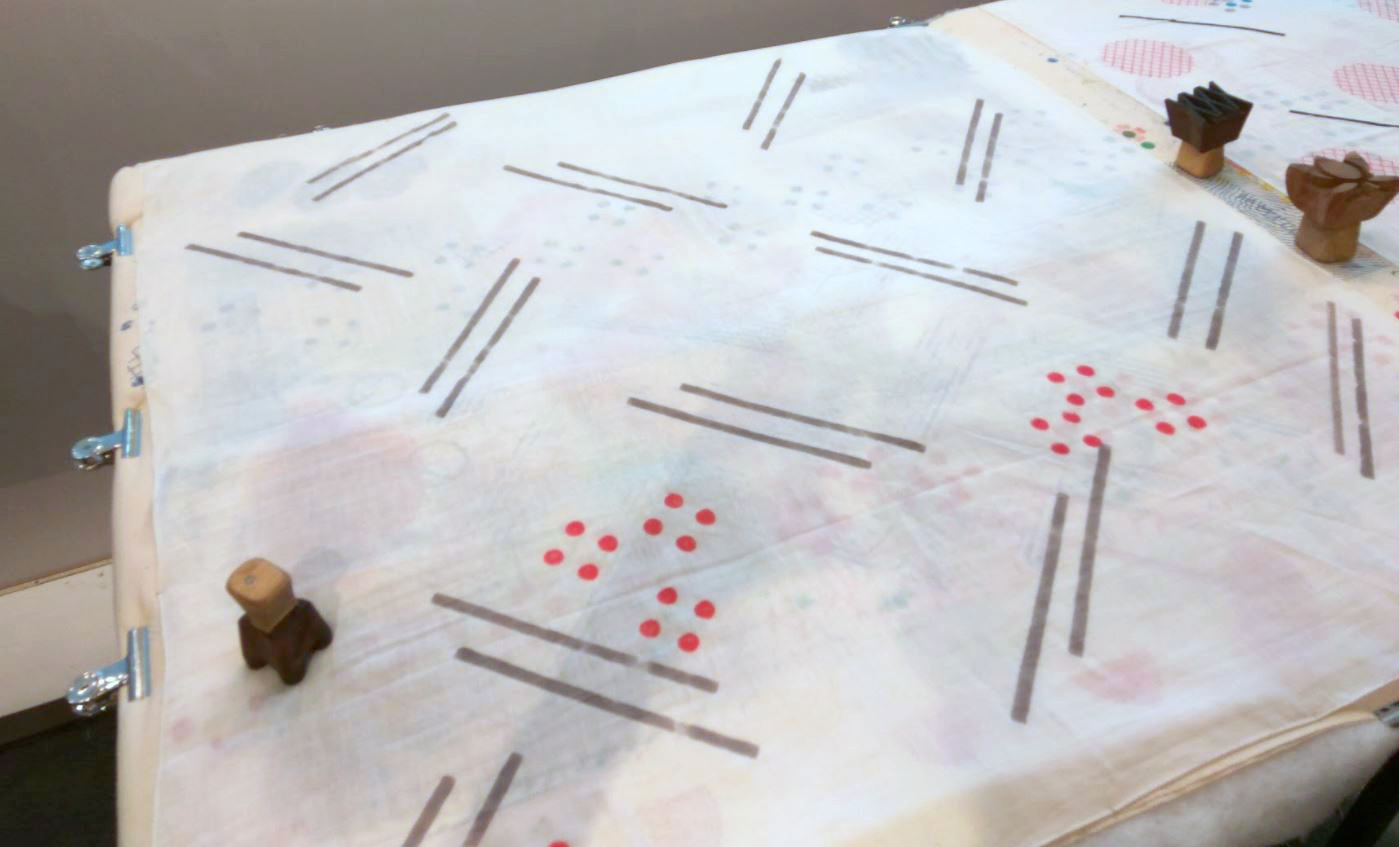
Block printing is traditionally achieved through carved woodblocks. If the artisan is planning on printing different colours on the fabric, the same pattern would have to be cut many times onto separate woodblocks - each block would have different parts cut out where the colour was not required.  Once the blocks are completed, they are then cured in oil to ensure that they are waterproof.

Block Printing with Matter

Fifth Generation Block Printing Artisan

My friend and I got the chance to try out block printing at Matter's block printing workshop in November last year. Fifth generation block printing artisan and Matter artisan partner, Khushiram Pandey, was flown in from India to share his expertise.  For those of you who are not familiar with the brand, Matter is a Singapore-based socially motivated fashion brand and work with artisanal communities around to produce designs inspired by tradition.

From the session, I was amazed to learn that the journey from creating the print design to eventually transferring the dye to the fabric could take up to several weeks to complete.  It would be so much easier and cheaper to use silk screen printing instead, but coming from a long line of artisans, Khushiram is passionate about preserving the traditional craft of block printing. 
Being a textile lover, I was very excited to learn. I had chosen to print on a silk-cotton blend scarf. Although we were not able to use natural dyes (as what Khushiram usually uses) or carve our own blocks,  we did get to explore the many woodblocks he had brought to the workshop.

Block printing workshop with Matter

Block Printing is Not Easy

Block printing is not easy - I hear your inner child shout, "But didn't we all block print with potatoes when we were children?".   Block printing is an art form. There are many elements to perfect:
  • Design - I stood in front of my square for quite a long time before I decided on the design I wanted. With so many block print designs to choose from, I didn't want to go overboard and end up with a kitsch look.  
  • Preparing the dye - one of the key components to block printing is ensuring the dye is of the right consistency. It was the first time I had seen dye seeped through a cotton and bamboo mat. Kushiram explained that this was important to ensure an even amount of dye coated the block.
  • Technique - Khushiram demonstrated how to dip the block into the pre-soaked mat of dye and the technique used to get a clean print. You could not be too heavy handed with the printing and he suggested that we practise a few times on the mat before working on our piece.

Block printing workshop with Matter

Block printing workshop with Matter

Incorporating the Scarf into My Wardrobe

I was very happy with the outcome of the workshop, and not to mention I learned something new.  As you can see from the photos, I settled for dots, triangles and lines. I was already thinking about how to incorporate it into my wardrobe. Eventually, I settled on upcycling my mother's wedding dress with the scarf.

Preserving Tradition - Wedding Dress

My parents got married in the seventies. It was the era of platforms, lace and balloon sleeves. My mum made her wedding dress and kept it for me. Unfortunately, the style was not right for my wedding but I decided to upcycle it (30+ years later and yes, I did as my mum's permission!). There is so much fabric on this dress to use that I made myself a top and I still have enough to make another.
This dress has a lot of memories - I took it out again from the wardrobe and spotted some confetti from the occasion.

Wedding Dress Upcycle


Upcycling Wedding Dress

The top that I made was slightly boat necked and had bat sleeves. I only had enough of the scarf to make the front part of the garment, but fortunately I was able to use the wedding dress material for both the back and front panels.

It's so lovely to have a garment that's block printed and upcycled from a wedding dress! It definitely gives preserving traditions a new meaning. Here I am in my new top paired with Matter pants. Stay tuned to see what happens to the other half of the wedding dress.

Wedding Dress Upcycle by Agy

Wander Responsibly in Singapore

No comments
Wander Responsibly in Singapore
Fashion Revolution is happening very soon but it's difficult to know what your sustainable fashion options are when we are known as a shopping paradise (did you know that we had more than 150 malls on this tiny island of ours?). At the beginning of the year, I was invited by ProjectJUST to share Singapore's sustainable options in a city guide. I had some doubts about how much Singapore has to offer as last year's research had only revealed a handful of businesses in this niche area. But this year I was pleasantly surprised by how much the market has grown. Let's hope that sustainable goes mainstream!

Read the city guide and wander responsibly! I hope you enjoy this beautiful city as much as I do.

City Guide Singapore Sustainable Options

Who are ProjectJUST?
ProjectJUST an online platform that reviews fashion brands for their supply chain ethics and sustainability. Extensive research is conducted, covering four approaches - self-reported information by the brand, 3rd party reports (e.g. NGOs), media reports and coverage, and finally seeking direct input from the brand. The work is transparent and available on their site for the public to review.  If you don't see a brand on the site, you can make a request. Hop over to ProjectJUST now and see how it can empower you not only to make conscious consumer decisions but influence the industry towards positive practices.

Vintage Part 2 - 8 Tips on How to Take Care of Vintage Clothing

4 comments

Last week, I interviewed Jasmine Chee of Dark Horse Vintage and she shared with us what vintage is and her 6 tips for buying vintage clothing. It's all done and good if you've invested in one such garment, but how do you care for it and stop it from deteriorating in Singapore's hot weather! A few years back I had shared my tips on making clothes last longer, but a little extra care is needed with vintage pieces as Jasmine explains. 


Laundering Tips

#1 Handwash is Best

Vintage garments tend to be very delicate especially if they are handsewn or are tailored from fragile or fine fabrics such as silk or chiffon. Handwashing will prolong the garment and minimise the friction of the fibers during the washing.  Jasmine says that if in doubt do approach a dry cleaner who has experience with delicate wear.


#2 Cold Wash


If you don't have time to handwash, then pop the garment into a laundry bag before putting it into the washing machine. Set the machine to COLD and low spin. Hot water will soften and damage the fibers. If the garment is very wet, avoid spinning at high speeds, and instead lay it flat on a towel and roll it up to squeeze out excess water. 


#3 Knits Dry Flat


Ever hung up a knitted garment and found it drooped by the end of the day? The best thing is dry it flat on a rack. Again, squeeze out excess water with a towel as in #2.


#4 Avoid the Sun

That's if you have colourful prints on your vintage garment - the colours will fade. Otherwise, if it's white then use sunlight to naturally whiten your whites. 


#5 Dry Inside Out

I always have an issue with my family not turning their clothes the right way around before putting them in the laundry basket. But, Jasmine says it is a good thing because the fibers on the right side won't be damaged as much. OK!


Storage Tips


#6 Hang or Fold?

Jasmine advises to fold delicate or knit vintage garments rather than hang them. 

#7 Acid Proof Paper

Acid proof paper helps protects your vintage clothing and apparently, it slows down their disintegration. 

#8 White Peppercorns

Yes, the little white tangy seeds are useful not only in the kitchen but in our wardrobe too. Jasmine says this old technique was used before moth balls were invented. These natural moth repellents can be bought in any spice store or supermarket. Just put a small handful of seeds into a sock or tissue and slip them between the clothes. Depending on the humidity, the peppers will have to be replenished once the peppery smell goes. Please be careful that you don't end up buying black seeds or else your garments will be stained. If you are living in colder climates then the best thing would be to use lavender or rosemary.

You might like this post!

Tips for buying Vintage clothing


Vintage Part 1 - 6 Tips for Buying Vintage Clothing

8 comments
Vintage Part 1 - 6 Tips for Buying Vintage Clothing
6 tips for buying vintage clothing

A few weeks ago I was reading Clothing Poverty by Andrew Brooks. One of the things that stood out was how people today perceive clothes that are passed on and resold. How the garments are regarded and valued is very much dependent on how they are presented and labeled to the consumer.  What do you think qualifies as secondhand clothing?

Secondhand or Vintage?

Most people would not give secondhand clothing another chance - "secondhand" gives the impression of being very old, worn out and not properly taken care of. 

"Secondhand" by definition means an item having had a previous owner.  By the same token, "vintage" would then be considered secondhand. So why is vintage's perceived value much higher than secondhand clothing in general? If an item from a thrift store was sold at a vintage shop or labelled as "vintage", would the consumer regard it more highly? I spoke to Jasmine Chee of Dark Horse Vintage to find out what vintage really means and what to look out for!  This is Part 1 of a two part series on Vintage. Look out for the 2nd part next week!    here.

A Treasure Trove - Dark Horse Vintage

This little gem is nestled right in the heart of Arab Street (31 Arab Street to be exact) and I chanced upon it when I was visiting their upstairs neighbour, Touch the Toes. When I first met Jasmine she had on the full works of a vintage lover - rolled hair, bright red lips, and an unforgettable outfit! Here she is:


Dark Horse Vintage
Jasmine Chee, Dark Horse Vintage [Image credit: Dark Horse Vintage]

Addicted to Vintage

I'm not a vintage addict (handmade and upcycled is more me) but Jasmine is and her journey began during her student days in London where the vintage culture is big. Her initial reaction was "eeew, secondhand", but she slowly embraced the unique beauty of the prints and textures that came with vintage clothing, and today, over half of her wardrobe is vintage. Jasmine says she is now very comfortable wearing vintage, although sometimes she mixes and matches vintage with contemporary pieces.

It wasn't long after finishing her fashion and textile studies that she returned to Singapore and decided to set up Dark Horse Vintage in 2012. She initially took a cautious approach by operating as a pop-up, but this gradually grew as Singaporeans responded warmly to her offerings, and by 2015 she had set up a brick and mortar shop in the heart of Bugis.


How Would You Define Vintage?

I think we all get confused by the terms, but Jasmine gave me the low down and put it simply as:

  1. Vintage:  more than 30 years old so we are talking about before the early 80s
  2. Antique: at least 100 years old
  3. Secondhand: from 2 seasons ago or something from 2 - 3 years ago

So from these definitions, vintage is not secondhand, but secondhand would eventually become vintage!


What Do We Look Out for in Vintage?

Sometimes, you will find the word "vintage" pop up in marketing campaigns or even in retail outlets purporting to be selling vintage garments. Jasmine advises us to avoid these as most of the time they are mass produced to look like vintage, but wait, what do we look out for when we would like to purchase an authentic vintage garment? Here are Jasmine's top tips:

#1 Styling - vintage styles are conservative, which means no plunging necklines, no sleeveless tops and no rising hemlines. We are talking about prim and proper with high necklines, collars and sleeves.


Modest necklines

#2 Silhouette - modesty rules when it comes to the silhouette and we definitely won't see very tight ones in a vintage garment.

#3 The Little Details -  remember to always look on the inside of the garment - look at the finishing and you might find that the item is handmade and sometimes made without a sewing machine; look for good tailoring. Vintage items usually have metal zippers, large seam allowances to enable adjustments in the future (ie. wider girth!) and good finishings like French seams. 


Hand sewn


#4 The Print - the type of print will indicate which period the piece is from. Very fine details in the print usually means that the fabric was printed with machine rather than painted by hand. 


Colourful prints


#5 Read the Labels - if it's handmade it won't have a label but if it does, read it carefully. Things to spot are where it was made in (ie not in a developing country), and use of natural materials (synthetics were not as common then and more expensive) and no blends,  

#6 Rich History - vintage doesn't look all the same as there are many defining periods, and history brings a different look to each one.

20s/30s was influenced by jazz and art deco. By the 40s we were at war and because of rationing, styles were limited to simple and less voluminous looks (ie no pleats).  The 50s gave way to more feminine looks, and by the time we reached the 60s fun and youthfulness was back in with the mod look. The 70s was all about maxis and the hippy look. 

Why Buy Vintage?

"You're buying into history", Jasmine Chee

Not only are you buying into the history, but you are becoming part of the garments story and enriching its narrative. Each vintage piece is one of a kind and exclusive to you - no more embarrassing moments in the office Christmas dinner! You are also buying something that is of good quality and has detailed finishing that you won't be able to find in today's retail outlets.


Clothes with Stories

My favourite moment of the interview was when Jasmine showed the stores vintage qipao / cheongsam and kebaya pieces and the stories behind them. Each piece was tailored and made from beautiful textiles. I learnt how each one was from a different time -  high collars for modesty in the 50s to the lower collars and less tight fitting bodices for the roaring 60s. What got me intrigued though was how did these pieces remain immaculate!


vintage qipao cheong sam


Want to know how to take care of your vintage clothes? Stay tuned for next week's post where Jasmine shares her tips in Part 2 of this post. 


Posts You Might Like


Want to know how to take care of your vintage clothing? Check it out here. 

vintage care


Disclaimer  - this post is not sponsored and all views are my own.

Sharing the Message of Reconnecting with Your Clothes

2 comments
Sharing the Message of Reconnecting with Your Clothes
These past few months have been crazy. Not much sewing or upcycling, mostly more sharing!

Sharing is good.
Sharing means getting more people to understand what you are doing.
Sharing means opening up your heart.

I was recently interviewed by Channel News Asia (thank you, Lianne!) and the response to the interview was very positive. Rewind 3 years back and the response to an interview then was extremely lukewarm - people didn't understand why I would want to pick up a needle and thread to upcycle my wardrobe.  I am amazed by how the whole environmental movement in Singapore has transformed.  People are starting to realise that it all starts with them!

Agy upcycles clothes

We now have so many ground-up initiatives, and just last week we had the Singapore Eco Film Festival. Being on the panel discussion on Minimalism, it was amazing to see so many people were eager to know how to incorporate environmental actions into their lives. 

Singapore Eco Film Festival
(L to R : Olivia Choong, Kevin Teng, Ng Hui Ying, Agy)

The movement is even spreading into our schools. My good friend, Lara of Secondsguru, organised a sharing session on sustainable fashion with the UWCSEA Dover Parent Teacher Committee. I do hope people see the need for reducing their consumption, caring for their clothes and finally making do with less.  It would be interesting what the environmental scene is like in another 3 years. Watch this space!

Angel Gowns Singapore - Upcycled Wedding Dresses

3 comments
Angel Gowns Singapore - Upcycled Wedding Dresses
Angel Gowns Singapore

Would you be brave enough to cut up your wedding dress and transform it into a little more wearable? Wedding dresses are becoming more extravagant (including the actual event!) and unfortunately, put away never to be worn again, unless if you are going to dye it and wear it at another formal do (very unlikely in my case).

My wedding dress was lovingly made by my mother. When we first went hunting for the dress, I couldn't believe how much it cost just to rent one, and so we settled on making one for less than $100 (about US$80)  - we went for a simple princess cut but even then with all the satin fabric and tulle that went into it, I don't think I would wear it again. She even kept her own wedding dress - a 70's style cream dress complete with puffy sleeves and high waist line. I think she secretly wanted me to wear it on my big day but I told her that I will think of something to transform it.... sorry, mum.
The best wedding dress transformation I have seen is from Pam of Threading My Way .  She upcycled her daughter's wedding dress into this lovely number complete with matching clutch. 


Angel Gowns Singapore - Donate Your Wedding Dresses
If you really don't know what to do with the wedding dress hanging in your wardrobe, why not donate it to a good cause instead?
Angel Gowns Singapore accepts pre-owned wedding gowns and upcycles them into beautiful angel gowns for babies who sadly do not make it home from the hospital. Andrea Toh of the group explains,

"Although we live in an affluent society, it remains inevitable that lives are lost due to complications and unforeseen circumstances. Regardless of the period in gestation, a baby's life is celebrated by a Mother and Father upon conception. When this life is lost, the family is overwhelmed by grief and devastation. It is often heart breaking for the family to go shopping for clothing just to say goodbye to their loved ones. Often, retail clothing might not even fit the tiny bodies of premature babies. Angel Gowns Singapore is here to provide support for these families, to let them know that there is someone out there who care that a little life was lost. Although these lives have not set foot on earth, they have already left foot prints in our hearts."


Run by volunteers
The group is a community of 25 sewists (and growing!) who are helping to transform the wedding gowns to angel gowns.  The initial call for volunteers was in August this year, when Andrea saw a post of a similar initiative in the USA, Angel Gowns USA, and decided to start it Singapore.  After a couple of calls, gathering volunteers and friends, and eventually getting in touch with KK Hospital to collaborate on the project, the group managed to get the wheel turning and lovingly produce angel gowns.

Angel Gowns Singapore


The sewists come from all walks of life and backgrounds and range from a wedding gown designer to a grandmother of 3.  They are still looking for volunteers and would like to grow the group . They meet up on the 3rd Wed of each month, and during these meet ups, they guide the volunteers on how to sew the gowns so they can bring it home to complete.

Andrea adds, "We have had the 1st meet up last week on 14 Sep and a total of 14 volunteers came. They have all brought back a gown each and the angel gowns are so pretty - looking at them makes you happy and sad at the same time. We are glad the wedding gowns have been repurposed but at the same time we hope the Angel Gowns are not used up so quickly. For advance sewists, the deconstructed gowns with pattern pieces  can be sent to them to sew at home."

You Can Help!
A lot of time and effort goes into the coordination of the work involved, and the ladies also ensure that the gowns are designed, sewn and cleaned with care before they are sent to the hospital. If you are looking to contribute to your time or would like to donate the following to the cause, do drop the ladies an email.

Wedding Gown Donations
To create the Angel Gowns, the group of volunteers seek donations of Wedding Gowns and other items such as:

1. Wedding Gowns, Bridesmaid Gowns, Baptism Dresses
2. White tea ceremony or dinner dresses
3. Lace
4. White Bias Tapes
5. Pearl Buttons
6. White Ribbons (width 0.5")

Andrea adds that they can be dropped off at any of the following locations, but do drop them an email first!

North - 5 min from Sembawang MRT
East (1) - Bedok MRT
East (2) - Tampines Ave 8
North East: Anchorvale Link
West: Choa Chu Kang MRT

So if you do have a wedding dress that's sitting in your wardrobe, why not drop it off at Angel Gowns! There will be families who will appreciate the donation and cherish the Angel Gown for making the moment extra special for them.

Walk Sew Good

6 comments
Walk Sew Good
Do you ever wonder.....what if?
What if I had decided to stay?
What if I had taken design instead of science for my college studies?
What if I didn't have kids?
A few chance encounters this month stirred these thoughts.
  1. A friend mentioned over coffee how being married with kids changes our progression as artists. No overseas workshop trips, less time to experiment and being in the flow of creativity. It's a change in priorities! 
  2. I attended a talk "Surface Design: Discover the Quality of Tactile Fabrics" and discovered that Tiffany Loy and Minyi both went to Japan to study weaving and shibori, respectively.  I wanted to scream, "I want to do that too!"
  3. Then I e-met two wonderful ladies, ​Gabrielle Murphy and Megan O’Malley who plan to walk across Southeast Asia later this year. They plan to speak with and learn from the people that are making fashion in a positive and sustainable way. I wanted to scream even louder, "If only!"
I started wondering "what if I had made these decisions earlier in life?". Obviously this would be very unfair to my family as I had made a commitment to be with them. But can I do something to improve my situation?

Of course I can! I saw this quote on a friend's facebook feed. It's true, you have to change your situation to be where you want to be. I might not be able to go on a study/workshop trip, but I can continue learning on my own and attend local workshops to satiate my hunger for knowledge.  I will squeeze in as much time as I can to continue my craft, and be extremely DISCIPLINED (ahem, do you really need to surf the internet?). It's my life and I have to take control of it!

Everybody's journey will be different, but by witnessing and being part of others' experiences we can grow richer too. I'm so in awe of Megan and Gabrielle - what they are doing is amazing. They will be connecting with people across South East Asia, people who are trying to change the fashion industry status quo for the better.  The stories of these people will be shared on Youtube and as Megan beautifully puts it, 

“We want to connect people with the stories of those working hard to create fashion in a sustainable and beautiful way. The aim of Walk Sew Good is to start a conversation with our followers and show them how they can support a fashion industry that has a positive impact,”

I asked both of them what pushed them to do this, and I wondered how their families felt. Megan and Gabrielle mentioned that the inspiration to walk came from the 13,000km pilgrimage Satish Kumar undertook to promote nuclear disarmament in the 1960s,

"In terms of how we decided to go for it, the idea had been mulling around in my brain for about a year and a half after I read an article about Satish Kumar before I did anything about it. What a legend and an inspiration! I highly recommend his book if you can get your hands on it. He did his walk to promote nuclear disarmament and after reading the Dumbo Feather article, I felt like I wanted to do something as powerful and meaningful about a subject I cared deeply about."  - Megan

I really could understand what was going through Gab's mind when she alluded to the "now or never" attitude. If you don't do it now, then when?

"I could spend the next 50 years of my life stuck behind a computer, or desk or counter in a job I hate, complaining about the state of the world, doing nothing about it, then die sad and depressed without ever having really lived; OR I could join Walk Sew Good with Megan." - Gab

Are they scared? Yes, they are (and so are their families), but, as Gab put it, 

"I think that there are some risks in life that are worth taking. If this trip can help make a difference to slavery, pollution or improve sustainability it's worth it. Hell, if it can stop my friends from buying so much crap then it's worth it. "

If you would like to support them on their 5,000km journey across SE Asia, pop over to their campaign page and "like" them on their facebook so that you can be "part" of their journey.  These two definitely knew what they wanted to do and are an inspiration to all of us!


So stop asking the "what ifs" and change them to "now or never"!

What is Sustainable Fashion Really?

1 comment
A few weeks ago I caught up with my friend Lastrina, and found out that since her COP21 moment in Paris last year (you can read about it here) she has taken great strides to get Singaporeans to be more concerned about climate change, and, more importantly to take action.  She co-founded, Singapore Youth for Climate Action (SYCA) with three other amazing ladies who were also attended COP21 - Melissa Chong, Cuifen Pui and Juliana Chia.  One of the initiatives under SYCA is the Learning and Leadership Programme, which involves deepening youth knowledge on climate-related topics in the local context; and secondly understand oneself better, and enhance skills needed to start movements.

SYCA invited Connected Threads Asia to be resource people during one of the sessions (23 April) and I was very honoured to facilitate the session.  Participants experienced a session of exploring their values, understanding the supply chain of the fashion industry, and working as teams to define what would be the most sustainable garment. For me one of the points that came to mind during the session is how everyone has a different take on what sustainable fashion is. In fact, many people I speak to don't realise that to achieve sustainability in an industry :

a) It takes time. Existing companies are huge mammoth like structures with supply chains that extend across the globe, so change happens a step at a time. Positive changes have been made since Rana Plaza, some people say not fast enough,  but remember because so many parties involved things can't happen over night.

b) Systemic change has to happen and for this to occur, collaboration is needed. And when I mean collaboration, I mean with EVERYONE who is part of the system, including the authorities.  Take for example, a few stores setting up a clothes recycling bins is only a small step, but collaborating with the local authorities to have an official collection .... now that's big impact and everyone can get involved. If you are looking for alternative technologies to recycle mixed textile blends or a create a waterless dye, why not work together with other brands to develop it so you get economies of scale when it comes onto the market. It's a win-win for the brands and the environment.

And then there is this .... the vast amount of information on the internet .... there is so  much that people jump to conclusions and they don't dig deeper. If in doubt, try searching for the information yourself, treat what you see that gets posted or shared with a pinch of salt.

The slack that some brands such as H&M and Levis are getting are a case in point.  Business model aside (yes, I don't like the fact that seasons change EVERY week to promote consumerism) , brands that are making positive changes to their supply chain (be it environmental or from an ethical point of view) and are transparent  about it (varying degrees, I might add) appear to be the ones that are usually picked on. Remember the World Recycling Week campaign? Many people were accusing H&M of being unsustainable and forgot about the things that they were doing for positive change. Rather than point fingers and be a keyboard warrior, why not work together towards something better? Why not get the ones who are not making any change at all to do something?

And what do you think about the backlash to Australian brand Gorman? They posted a #whomademyclothes post in response to the Fashion Revolution Day campaign. Unfortunately, or fortunately, they were called out by the public - their parent company were graded an "F" in The 2016 Australian Fashion Report.  What does the grade "F" mean? What would your response be?


 A lot of the people who commented on Gorman's instagram did not know what the grade "F" meant or did they read the report.  What would you do?

Please note, I'm not defending all these organisations, nor do I buy from fast fashion ones either because I believe in 2nd hand / upcycled or ethically made purchases.  You might not believe in the same things I do, but I do believe that everyone should be well-informed to make the right choices.

Interactive Textiles

2 comments
Interactive Textiles
Things come together in the strangest ways!
One of my maker friends, Leon, was talking to me about how cool it would be to make an interactive display panel with animation and moving objects for Maker Faire.  I thought it would be a great idea too, but then what would be the narrative? You can't just expect whirring objects to attract people, you needed to have an objective behind it.  We didn't have the idea until we were having dinner with our friend Mel - she blurted "Hey, you could have it be part of  Fashion Revolution Day".  We were very excited and overwhelmed at the same time as we needed to quickly form a team to cover the electronics, design and animation as well as textile integration.  Fortunately, Leon was very happy to implement the projection mapping and integrate it with the electronics (capacitive touch sensing), I was keen on the textile integration, and we managed to get students of the School of Digital Media and Infocomm Technology, Singapore Polytechnic to assist with the design and animation. Everything fell into place.  Two months later, this is what we have!

interactive textiles

The whole concept of the interactive was to inform viewers of what their sustainable fashion choices are - a corresponding animation would be played. The students were great and came up with a great design and accompanying animation (very hipster, I might add!). We are now onto the final stages and I am integrating the textiles into the design, and we still have to combine it with the electronics. Sneak peak of the animation is on my IG! Come down to take a look at it on the 24th April 4 - 7pm at the Hub Impact Singapore, 128 Prinsep Street. More details here.


What Does Fashion Revolution Mean to You?

7 comments

What does Fashion Revolution mean to you?

What's your pledge?

Come down to The Impact Hub on 24 April at 4pm -
a) Watch the The True Cost documentary
b) Pledge your commitment to sustainable fashion
c) Meet new friends!

Sign up at Connected Threads Asia website or Facebook.

Managing My Time

3 comments
Managing My Time
"Agatha, why are you so busy?"
"Don't you get tired?"
I've been asked these questions for the past few weeks, and probably because I find that I have to miraculously replicate myself so that I can go to different meetings and meet people who share the same passion as I do. 
But, to answer the questions, I'm busy because I believe we still have a long way to go in getting people to put their environmental awareness into actions; I want to do something about it! I also have a family so they are also my priority. I try to juggle between these two, and when it gets very busy, family comes first. 
Do I get tired? Yes, I do. I think over did it in the first half of last year and got exhausted. However, I think it's because I was a one-woman show, and I came to realise that to make change you need a COMMUNITY, and you need to COLLABORATE. I also realised I needed to LET GO of some things I was doing. You just can't do everything and you need to delegate it to someone, or even collaborate with someone who will do it for you. If you don't, you'll be too tired, and you'll have no energy for other things in your life.  So when we wanted to do a campaign for Fashion Revolution Day Singapore, there was no way I could create a video and photo shoot in under one month! Get the professionals, and they produced this!


But sometimes you do have to say "no" to certain things no matter how enticing it is - you don't want to overstretch yourself, and if you don't have the time to contribute in a meaningful way, say "no". Don't Never be the silent partner in a collaboration! 
I'm very happy I am working with great people; it makes the things I do all the more enjoyable and, at times, less stressful. Does it look like that here? :)

Fashion Revolution Singapore


Engaging the Public? Make it Fun!

3 comments
Engaging the Public? Make it Fun!
Make It Fun

The past few months have been really busy at Connected Threads Asia. The team were initially planning for a small and serious session for Fashion Revolution Day (24 April) but then we realised that to engage the public we would need to make it fun. If there was no element of fun,  there would be no one interested no matter how meaningful it would be.

Remember when the Ice Bucket Challenge of the ALS association went viral on social media? It was a huge success with the association receiving an overwhelming amount of donations and an increase in the number of donors in that period too.  Why was this the case? Well, it's because of the fun factor - it was extremely fun to pour ice-cold water over yourself (even though it had nothing to do with ALS at all!), nominate your friends to do the same, and watch them "suffer" on their videos! It was a really good way of getting audience engagement.

Hauternatives
Speaking of videos, Fashion Revolution has capitalised on the trend of fashion hauls. Many fashion vloggers and bloggers share their shopping hauls on a regular basis, enticing their viewers to shop even more.  So I thought it was very clever when Fashion Revolution decided to encourage conscious vloggers to steer their hauls towards sustainable fashion choices (note choices and not purchases) instead.  With the ability of vloggers and bloggers to influence fashion choices,  can you imagine the power of a sustainable fashion haul #haulternative?

The Clothes Swaps
When I look back at the sustainable fashion events that have been organised, I noticed that clothes swaps are one of the best ways to engage an audience on the topic - everyone loves to get clothes for free, and when it runs like a shopping mall (ironically), the interaction is just phenomenal. I do not know (or seen any studies on this) whether the audience understands the environmental significance of a clothes swap, but perhaps this will be realised through long term engagement of these events . 

clothes swap

The Power of the Hashtag
Another great vehicle is the hashtag. If you don't know what a hashtag is then now's the time to google it! Fashion Revolution has used the hashtag #whomademyclothes to its advantage and it has enabled more people to be engaged in the movement.  However, hashtags have to relate to the campaign, illicit the public's curiosity to find out more and be fun. I think the #whomademyclothes hashtag fits this perfectly - when the campaign first started out people around the world were taking photos of themselves with their clothes inside out and asking

whomademyclothes


What do you think are fun ways of engaging an audience for your campaign?

How to Make the Fashion Industry go Eco

6 comments

The Fashion We Love Comes With A Pricetag

Today's post comes all the way from Shanghai, China where theSquirrelz.com is helping close the waste loop in the fashion industry. They share with us a post about eco-conscious fashion design. Thank you, theSquirrelz

Photographer: Levi Brown/trunkarchive.com

There are few industries in the world today with more passion and more creativity than the fashion industry. Whether we're looking at the small independent designers or the behemoth-sized brands, there's constant change and ingenuity that goes into creating the clothes and accessories we chose to wear every day. But there's a problem of ethics that's been brewing inside the industry for decades.

There's a price to getting the textured feel we love and the colors we adore in our wearables. The textile industry in China (the world's largest production country) alone processes around 42 million tons of textile yearly.The production of all this textile creates billions of tons of soot and creates 2.5 billion tons of wastewater per year. With nearly 40% of the United States garments being imported from China, it's clear that there's not one specific country to blame - all countries need to change the environmental cost of fashion. But where do you begin?

Source: gettyimages.com


The Steps Towards A Zero-Waste Industry 

Statistics like the ones above make one thing crystal clear: if the creation of our clothes has to produce waste, we need to be able to count on the factories to be as frugal as possible with their production. Sadly, in the day and age of 'fast fashion', this is simply not the case. So what can we do? While a zero-waste fashion industry seems unlikely (there's a reason there's currently only one brand that claims zero-waste production), there are far more practical actions both the industry and its consumers can take.

Leigh Mapledoram, program manager for textiles at Wrap thinks the long-term solution lies in the longevity of our clothes. 

“If the average life of clothes could be extended by just nine months it could reduce carbon, water and waste footprints by 20-30%.” - Leigh Mapledoram
Others believe that the key to a more sustainable industry is a major shift towards ethical fashion, a term that still suffers from having an overly dull and green image, incapable of being high fashion. The forays of well-known brands into sustainability and upcycling have mostly been nothing more than promotional one-offs and small scale endeavors. Rarely has there been a systematic change, a radical shift, in the production line of big brands. While some are making a sincere effort, the fact is that fast fashion is an unsustainable volume business that strains the planet.

The simplest way to take a step towards a more sustainable industry, waste reduction, and ethical production is, however, often overlooked. To see where the majority of the waste lies, we have to go back to where all these brands have their products made: factories. What we find there is that in the textile industry alone, millions of tons of high-quality materials are discarded and destroyed (not to mention the billions of tons of material wasted across other industries).

Source: waviness.wordpress.com

A single wrong, mis-dyed color or a minute size mistake can send entire batches of product to the landfill or incinerator. If it's not made to the specs of their contractor, it is useless to the factories. But that does not mean it's useless to designers! If we want to make a low-effort, high-impact change in the industry, this is it. 


Unused And Unloved Does Not Mean Useless

Factories create, endlessly. But not everything they create is used. Imagine the leftovers and unused materials a small-time designer is left with at the end of a project. Now imagine a large scale brand. Now imagine the perpetual creation process of factories. Trimmings, defectives, overstock and abandoned orders are stocked indefinitely in warehouses. All these factories create on demand, and neither want to or are able to find an outlet for these materials. Instead they destroy their production: often high-quality materials that are perfect for designers to work with. You need only a bit of creativity to create with the materials others see no purpose for.


For instance, inventive designers at the upcycle marketplace theSquirrelz.com use left-over and unused materials to create brand new products with. Eco-fashion and green products that don't look crafty, but instead are exciting, innovative and (most importantly) sustainably designed.

High fashion made from unused materials isn't out of the question. Just take a look at the yearly Ecochic Design Awards, which turns upcycling into high fashion art. 10 eco-conscious designers show off their creations: inspiring and inventive outfits, created through upcycling waste materials. None of them would look out of place at a fashion show and, in fact, few would notice their eco-roots.

Photographer: Tim Wong/redress.com.hk

And in that, we see the baggage that the term eco and ethical fashion carries with it. Perhaps the key to waste reduction in the fashion industry isn't about making 'green fashion' a more acceptable term. Perhaps the key is to simply make all fashion 'green fashion'. Instead of turning textile waste into fashion, we can prevent the waste from becoming waste in the first place.

To achieve that, we need to make changes at the start of the production line.


Designing Eco-conscious With Overstock Materials

Almost every town in the world is host to the occasional craft swap or exchange where small-scale designers can source new eco-conscious material, knowing that this material would otherwise go to waste. Until now, the high-quantity, high-quality factory 'waste' material has been unreachable for brands and designers who can integrate these eco-conscious materials into their designs. After all, there's no such thing as a 'wrong color' or 'wrong size' when you're using those materials as a base to design with.


One of the key lessons learned from the 2015 EcoChic Design Awards is that designers find inspiration in restrictions. They turn the creation process on its head by designing with the materials available to them, instead of the materials they'd want. So next time you're in a crafting mood, give your creation an eco-friendly boost by sourcing materials that would otherwise go to waste. If you look in the right place, you can find material that's as high-quality as what you find in the shops, but with the added benefit of being eco-conscious.


theSquirrelz.com is opening the doors of factory warehouses full of overstock, and allowing designers worldwide to benefit from high-quality, low-cost materials that, with each purchase, helps save our environment.
An eco-materials wholesaler that doesn't restrict the quantity you need, whether you're a crafter or brand. Imagine an industry where we use every misprint, every wrongly dyed shirt and every off-size piece of textile. An industry aware that one man's waste is another man's treasure.

What Are Your Sustainable Fashion Choices?

10 comments
What Are Your Sustainable Fashion Choices?
Sustainable fashion choices

Do you know what your sustainable fashion choices are?
Many associate this genre of fashion with organic clothing. But wait, sustainable fashion is more than that.
Before the term "sustainable fashion" was coined, terms such as "eco", "green"  fashion, and even "hippy" (think tie-dye and hemp) were used. 
By the 1990s, with growing consumer awareness of who were the people behind the garments, the terms "fairtrade" and "ethical" appeared.   Fairtrade means developing communities have better trading conditions, while ethical garments mean that the workers in the factories are treated fairly and ensured safe working conditions. 
Today, fashion brands are also going beyond the "make-use-discard" business model and are coming to realise the value of waste textiles from their production lines or post-consumer textiles. Think Circular Economy - "make-use-recover".

It's All About Choices
To me "sustainable fashion" embraces all these models, but "sustainable fashion" is not just about making sustainable fashion purchases. It is making SUSTAINABLE FASHION CHOICES that fit your values and beliefs.


Not Buying  / Not Buying New

The first choice that you can take is reducing your purchases at the mall. Cut down on the number of clothes you have. You can repair torn garments, upcycle old clothes or even swap your clothes at clothes swaps. It's a fun way of spending your time, and did you know that it is very therapeutic? 

Singapore clothes swaps - Top Swop holds regular swops
Upcycling workshops - Don't forget I'm holding my next session on 27 March. Sign up here 
Repair sessions - Repair Kopitiam

But of course if you really need a "new" outfit, you can go to many of the thrift stores in your area.

List of Singapore thrift stores 

If you are buying....

There are many options available:
Fashion from
  1. Organic Fibres
  2. Natural Fibres
  3. Fairtrade Sources
  4. Ethical Production
  5. Low Chemical / Low Energy Production
  6. Zero Waste techniques
  7. Upcycled techniques (pre and post-consumer)

But remember to do your research.
Look at the brand's website.
What are their values? Are their values aligned with yours?
Are they transparent - do they share information regarding their operations?
Are they certified? And is this of concern to you?

So what are your sustainable fashion choices?

I'll be doing a post on certification very soon so stay tuned!

Here's a list of sustainable brands and stores in Singapore.

You might be interested in my Fashion Designers Do Good series where I explore how they can design sustainable garments.

Fashion Designers Do Good


Upcycle to Complement Your Wardrobe

8 comments
Upcycle to Complement Your Wardrobe
upcycle your clothes

So far my buy no new clothes has been successful - I was tempted by the post-Christmas sales at a sustainable fashion brand, and even thought that by buying it I would still be doing something good because it was an organic pair of pants (I love pants!). The only reason why I didn't buy it was because I had to rush off somewhere else and didn't get the chance to click "buy".  

I haven't upcycled much lately either because so far my wardrobe makes me happy - why would I want to change anything?

My only thoughts are that perhaps what I should upcycle / sew should complement what I already have. On reflection, perhaps there are some pieces that shouldn't have been made in the first place because it can't be worn with anything else and I would have to buy something else to get the look I wanted.  Realistically, it might have been better to have sent it to the thrift store or gifted to a swap.

Try to Aim for a Capsule Wardrobe
This concept has been around for over 30 years, and was made popular by Donna Karen, who launched her "7 Easy Pieces" range in 1985. I quite like the idea of having pieces that can be worn from work to play just by changing a certain item that you are wearing.  I'm not sure about just 7 having items only considering some of us live in extreme climes, and where I live we sweat buckets!  This article, has suggested some key pieces to put in your capsule.

Jennifer Scott talks about a 10 piece wardrobe in her TEDx talk, and gives some tips.


Complement Your Wardrobe
I think everyone knows that traditional colours will always be your staples whether it's work or play. But when you're upcycling a thrift store dress or a something from a clothes swap think about whether it will go with your blacks, creams, whites and navies in your wardrobe. I think what's more important is that you don't let too many colourful prints overwhelm what you have. I've usually found that I get distracted by the beautiful prints in the thrift store or swap, reconstruct it and THEN (only then) do I think about what I'm going to wear it with!  Let's break that habit.

Wear it 30 times?
Lucy Siegle has this rule of wearing something at least 30 times. She said that if you can't wear it at least 30 times then don't bother buying it. We should apply the same rule to upcycling our clothes. Why upcycle it when you're not going to wear it?


Have you thought about this when you upcycle your clothes?


no
no